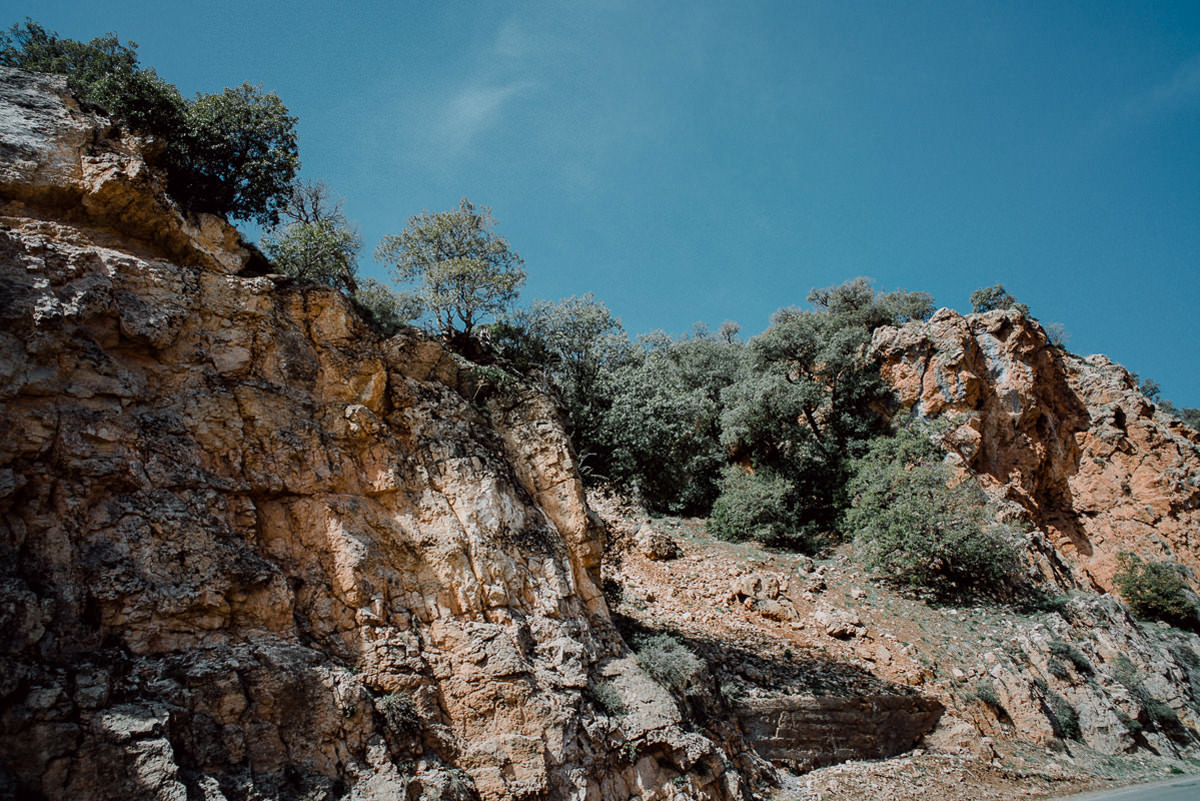
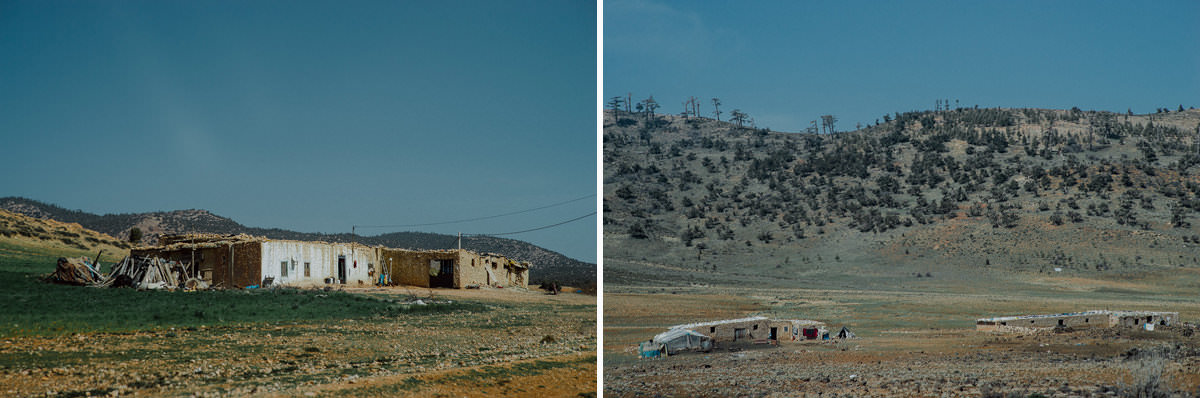
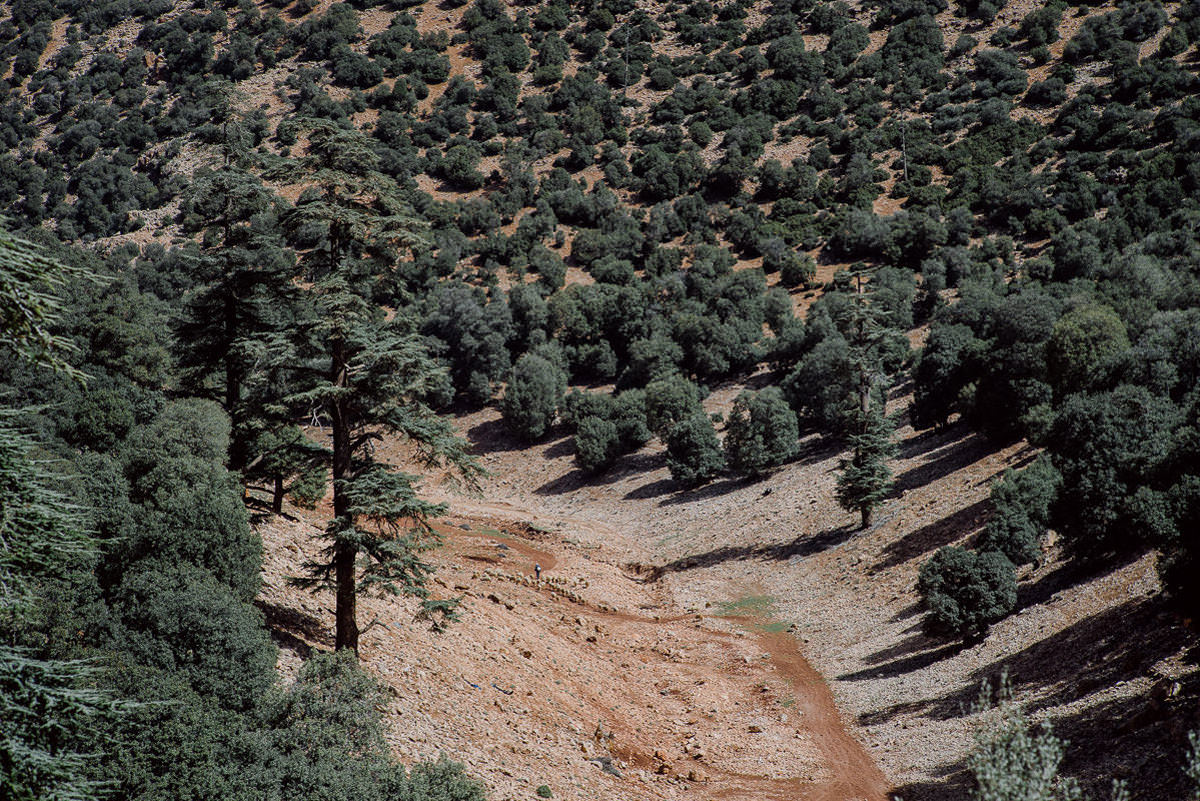
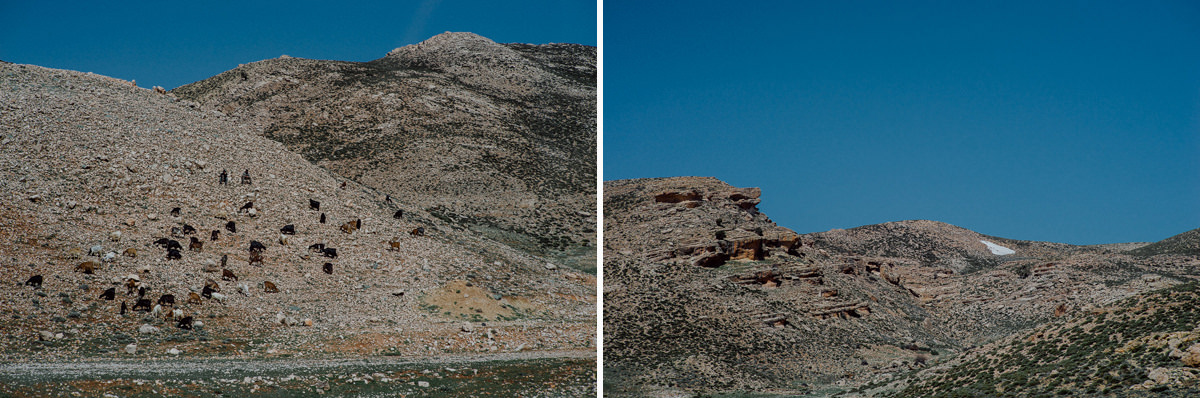
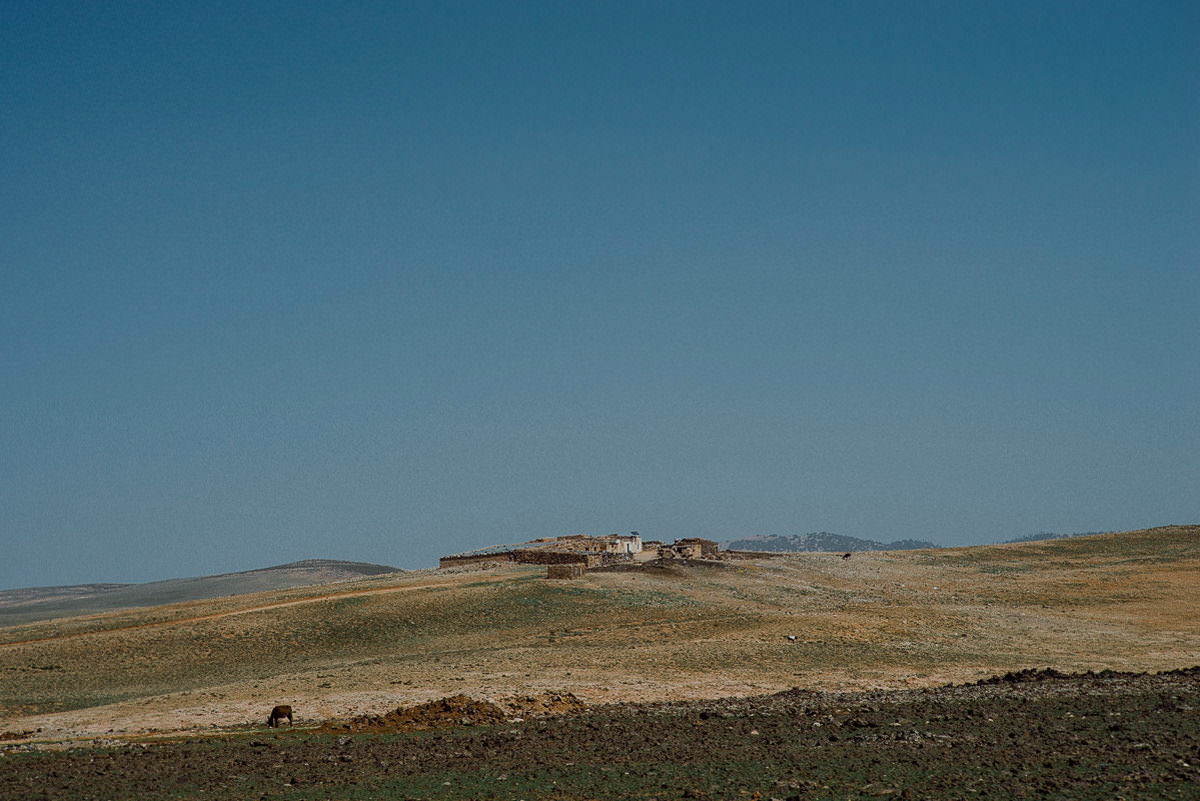
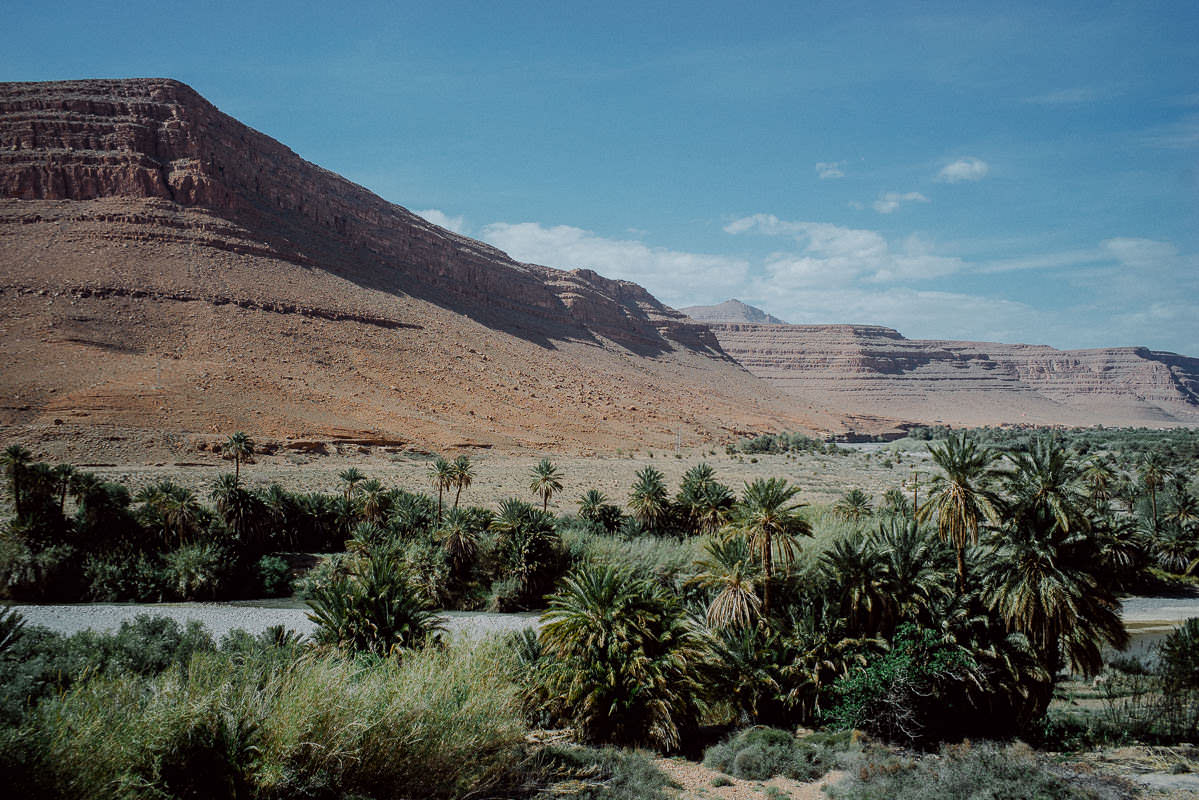
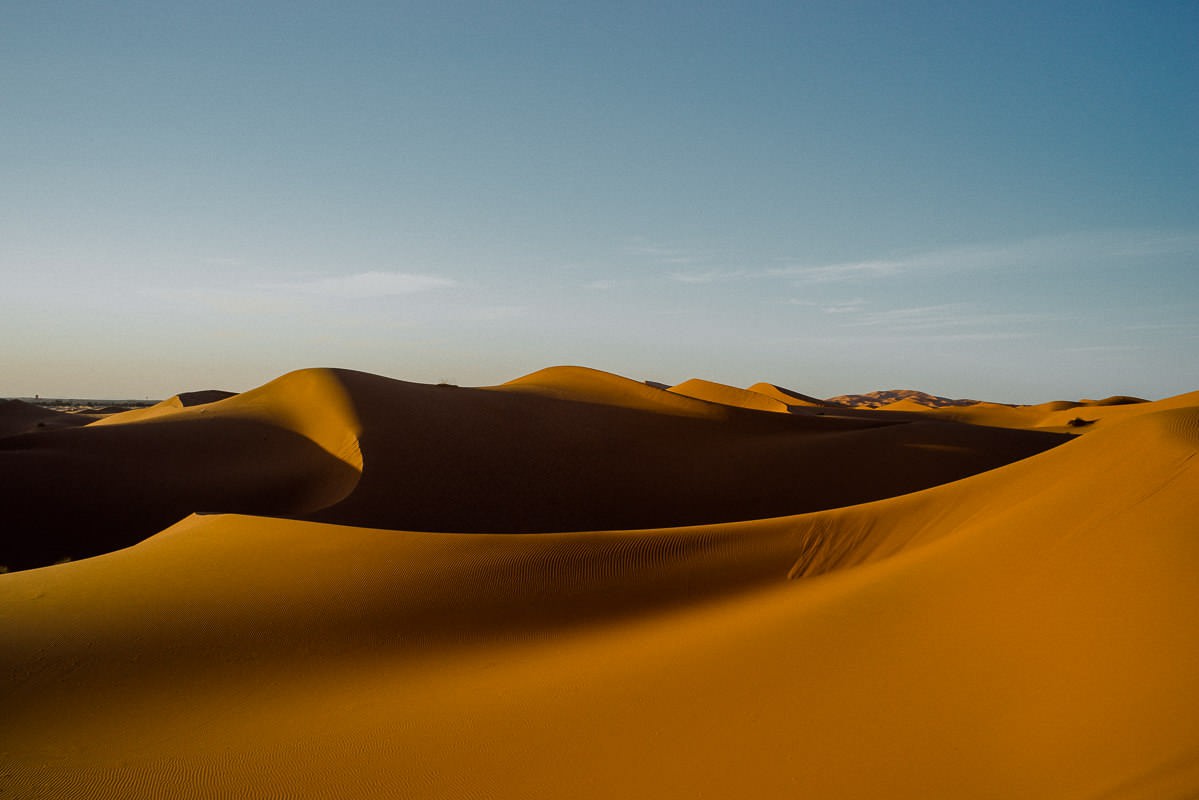
After the stopover in Midelt we headed for the last beautiful stop of our road trip: Fès, Morocco’s oldest imperial city. The drive there again led through an impressive, barren landscape that reminded me of Tibet.
Through the lanes to the tanneries of Fès
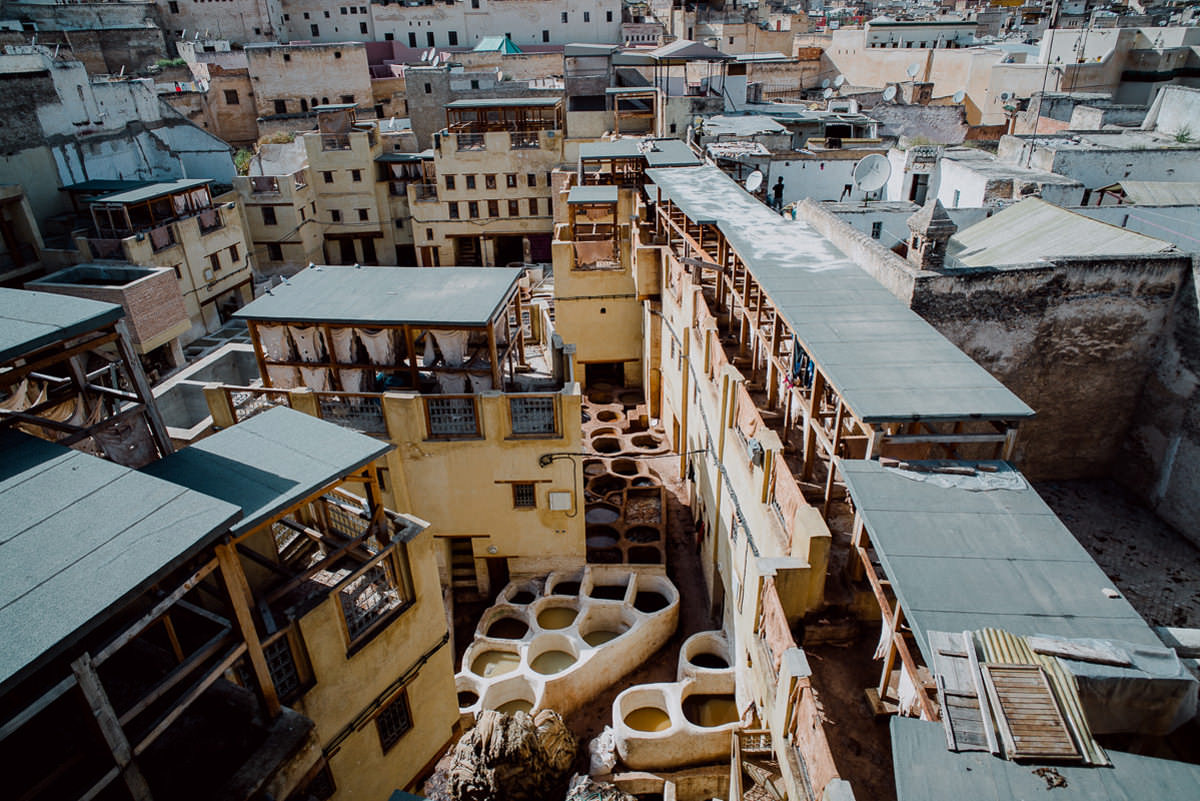
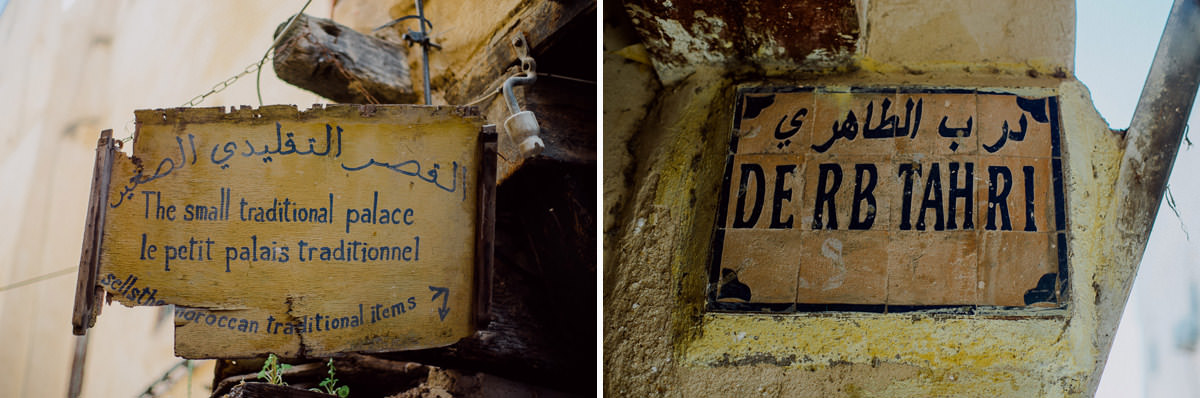
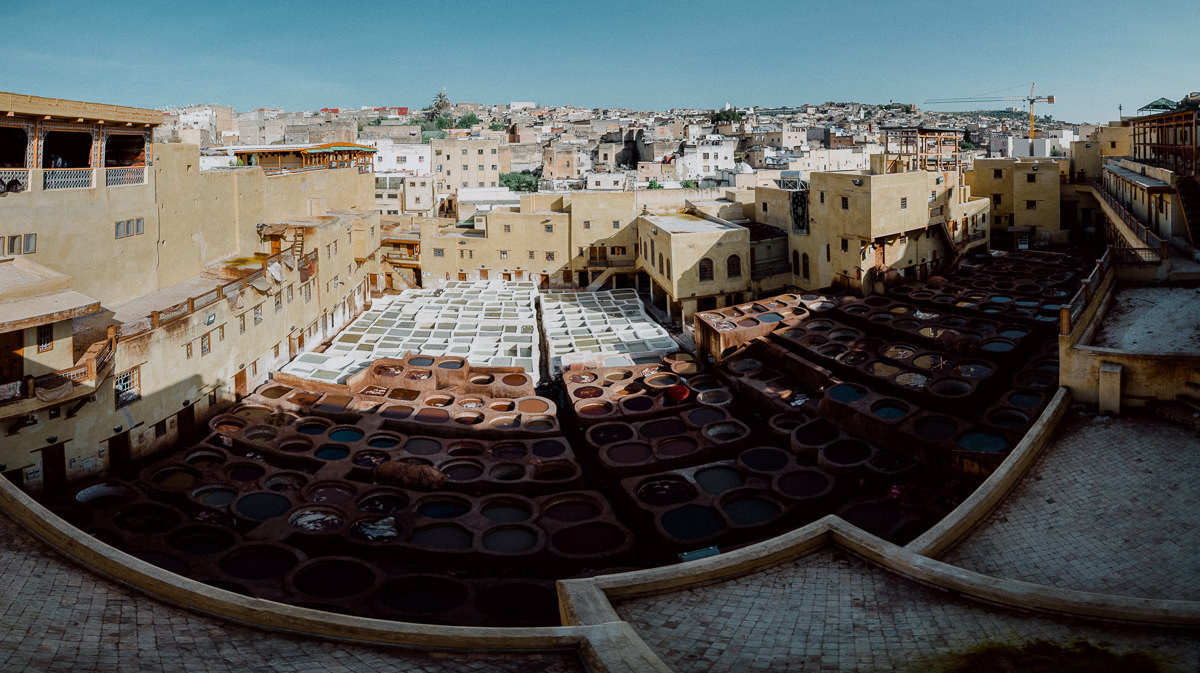
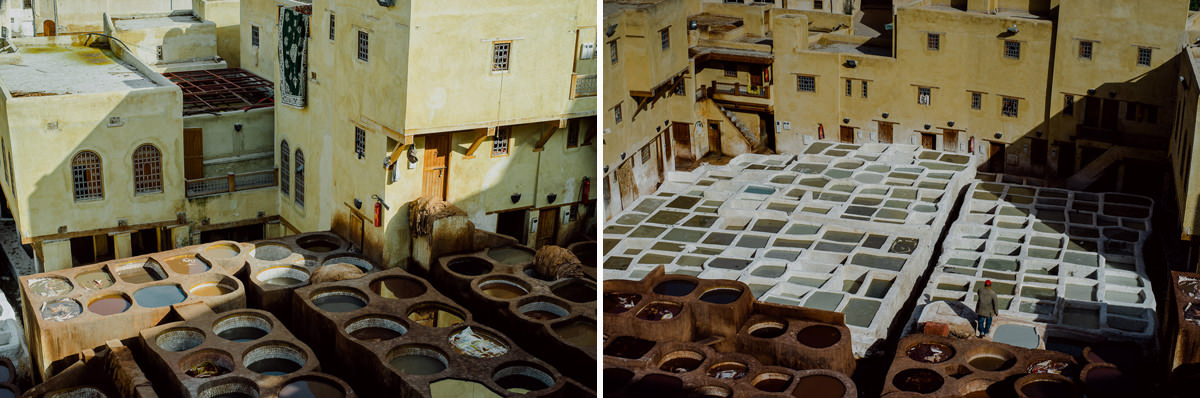
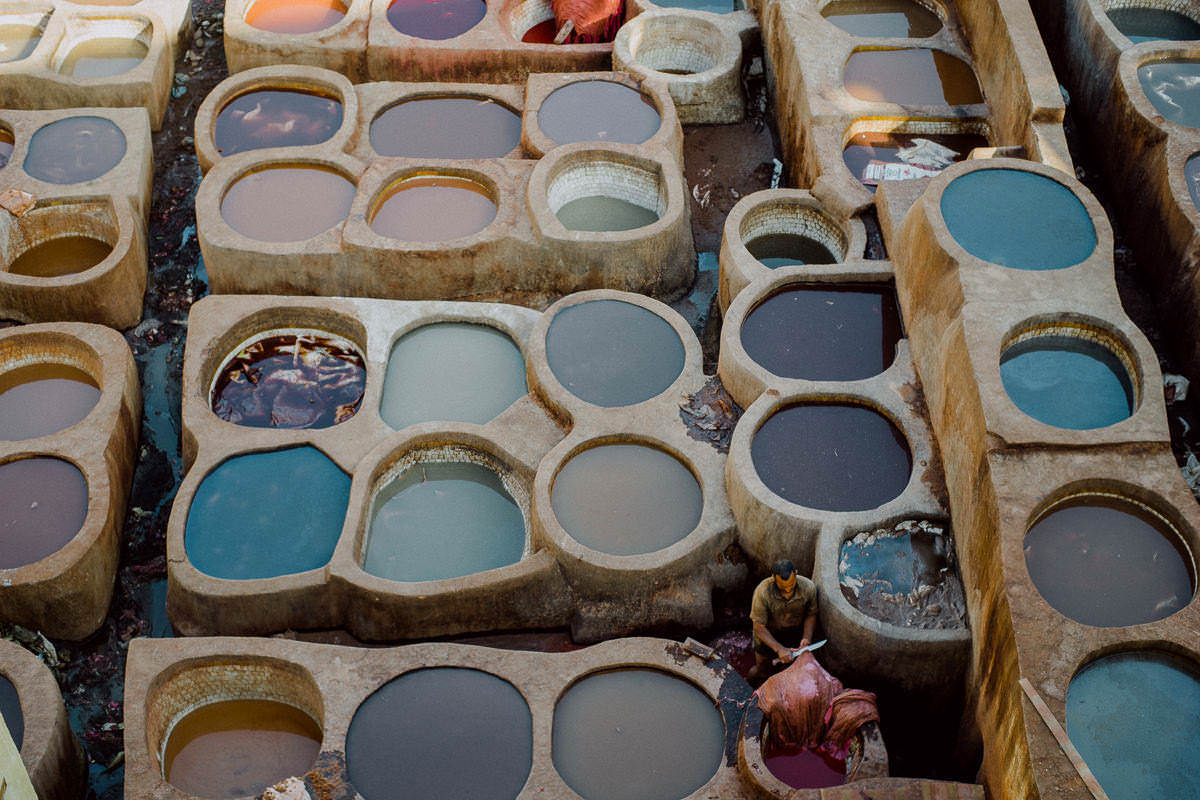
On our only full day we strolled through the narrow, colourful lanes, of course got lost a few times, and finally found the tanneries of Fès. As in Marrakesh, pieces of leather are dyed here in every colour. People seemed less pushy, and from some of the shops we had a lovely view of the tanneries – albeit with a smell that isn’t for every nose.
Madrasa, city gate and fountain
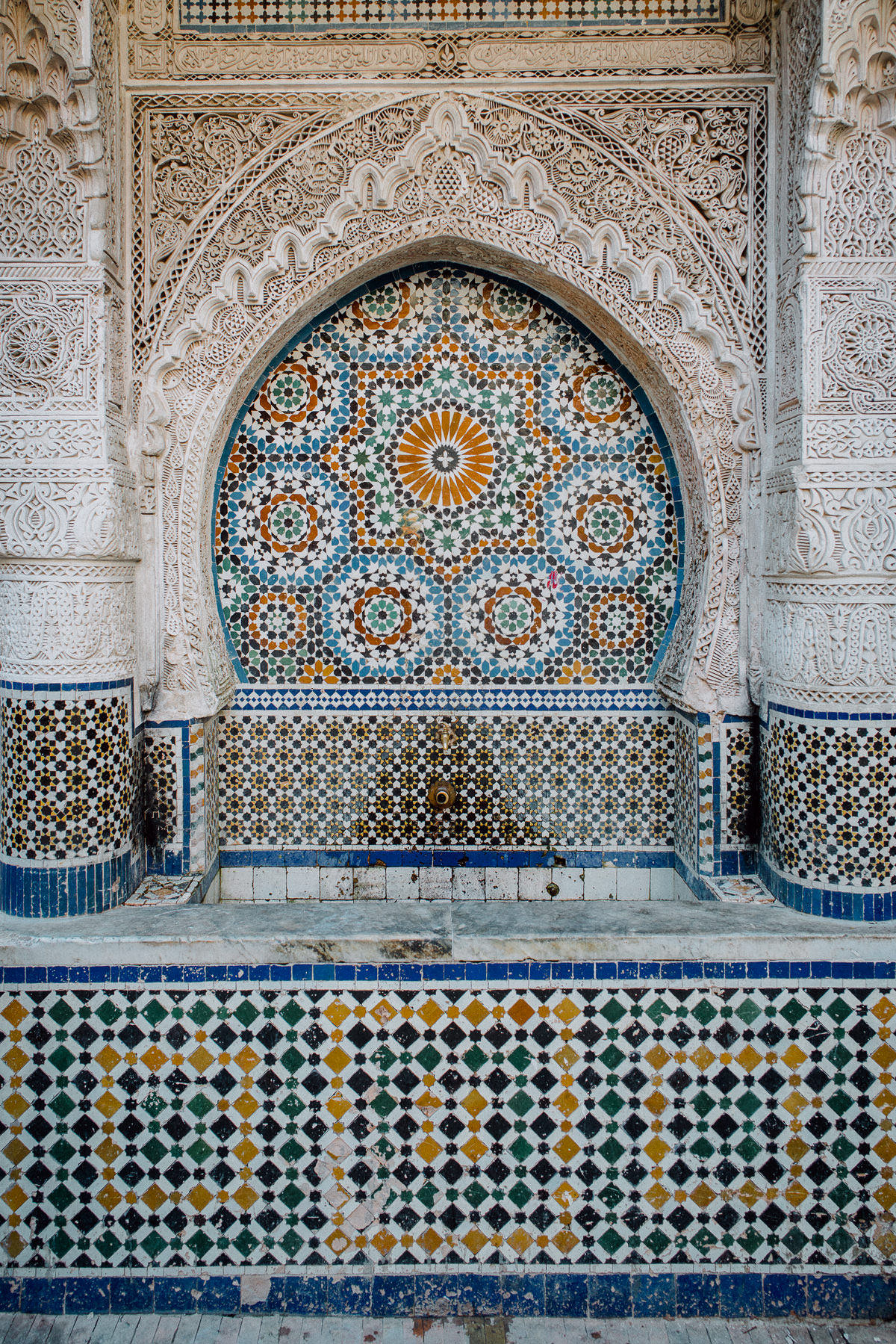
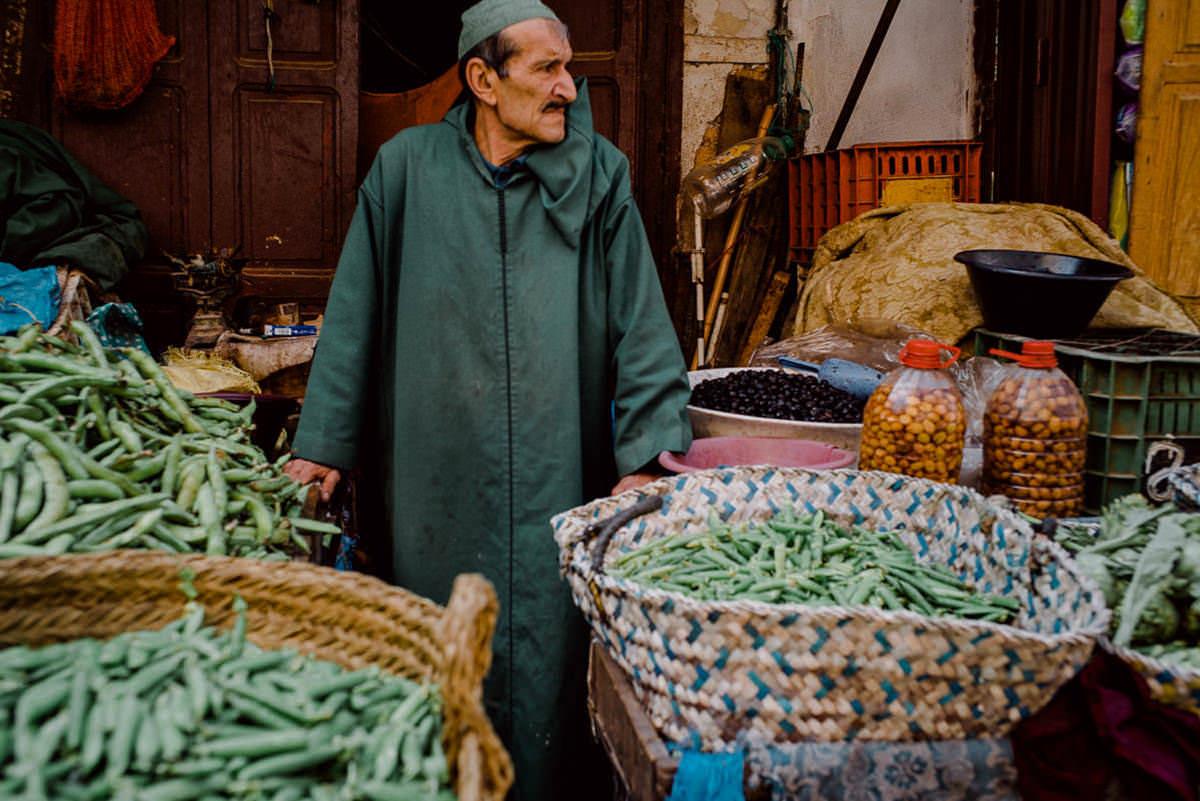
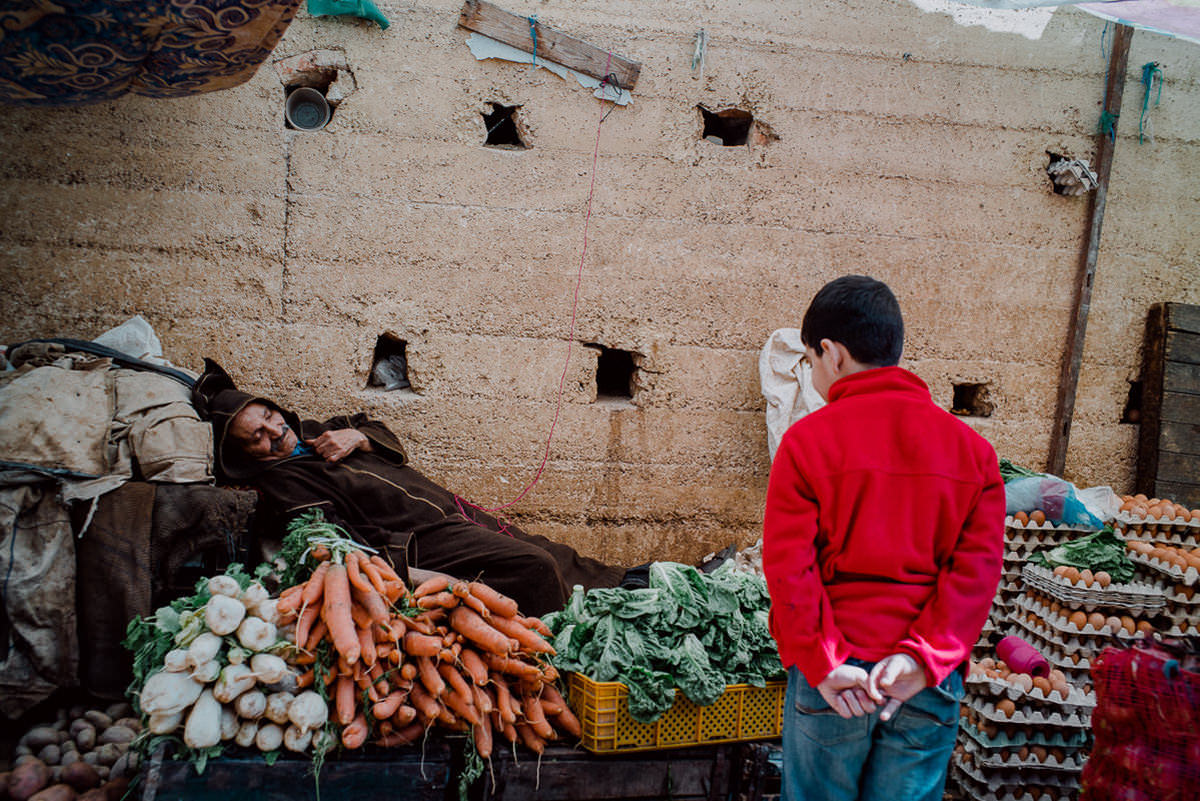
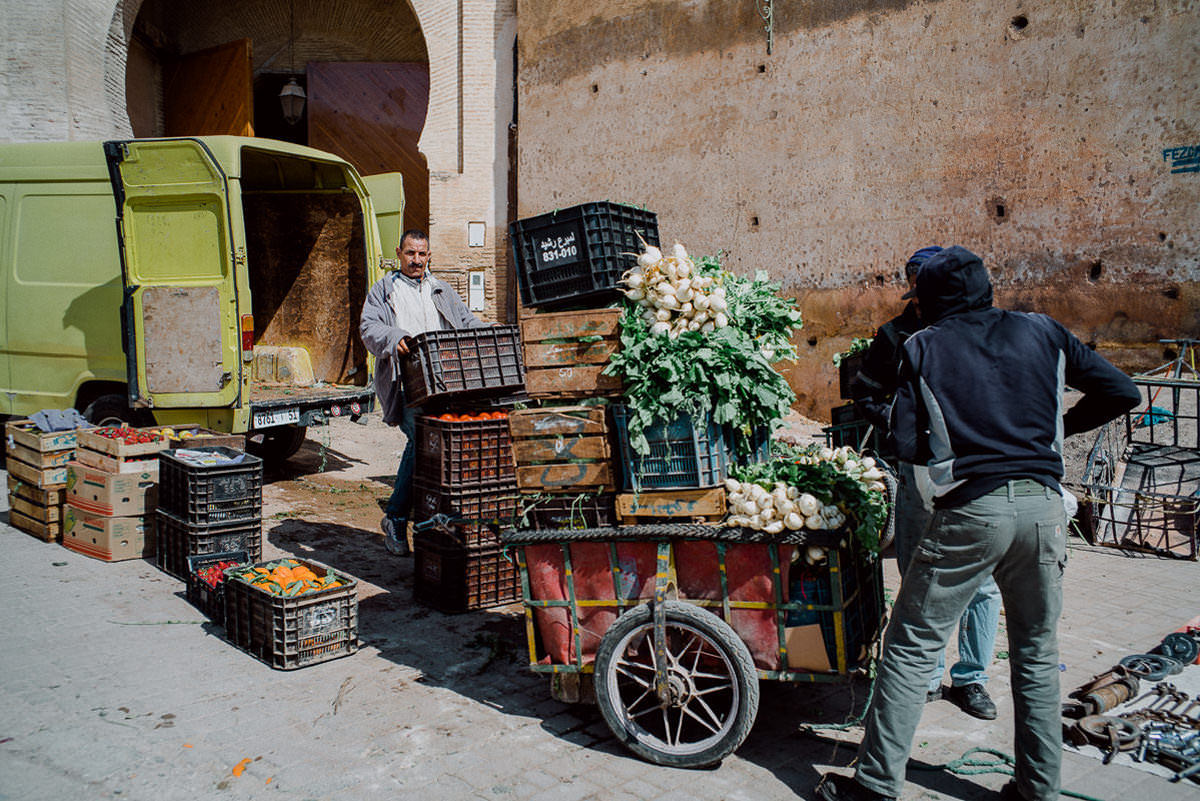
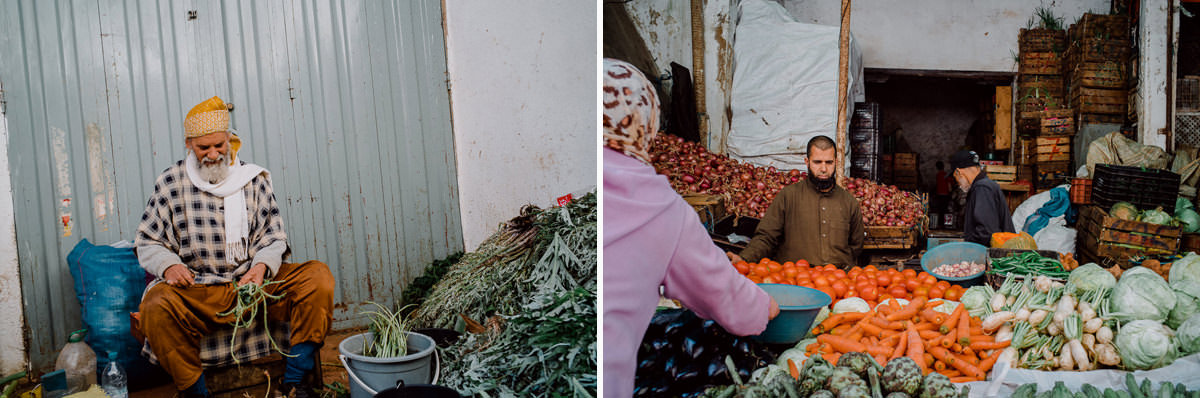
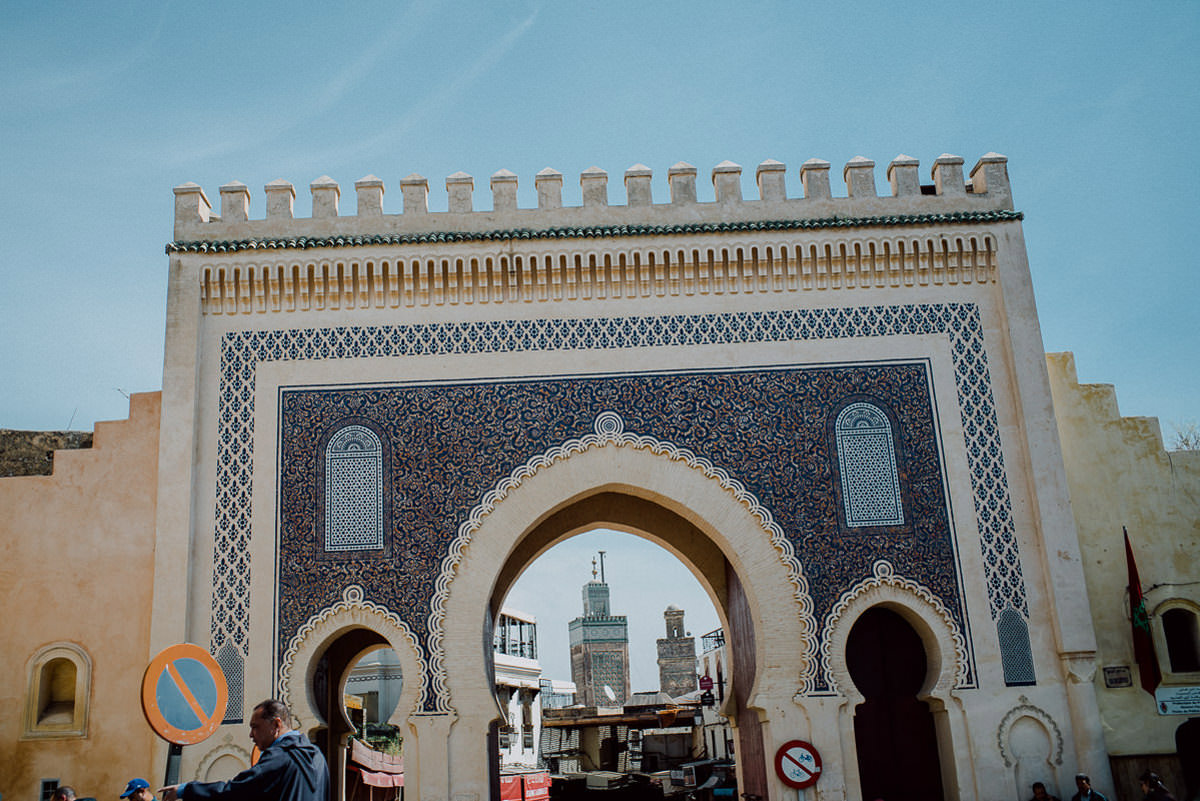
Afterwards we visited the Madrasa Attarine and the park by the magnificent city gate Bab Bou Jeloud, and strolled across the vegetable market back to the beautiful Nejjarine fountain. The old town of Fes el Bali was founded by the Idrisids between 789 and 808; it is a UNESCO World Heritage Site and has largely kept its maze of alleys and its city walls. The Chouara tannery is considered the largest and one of the oldest in the city and still works with round stone vats today.
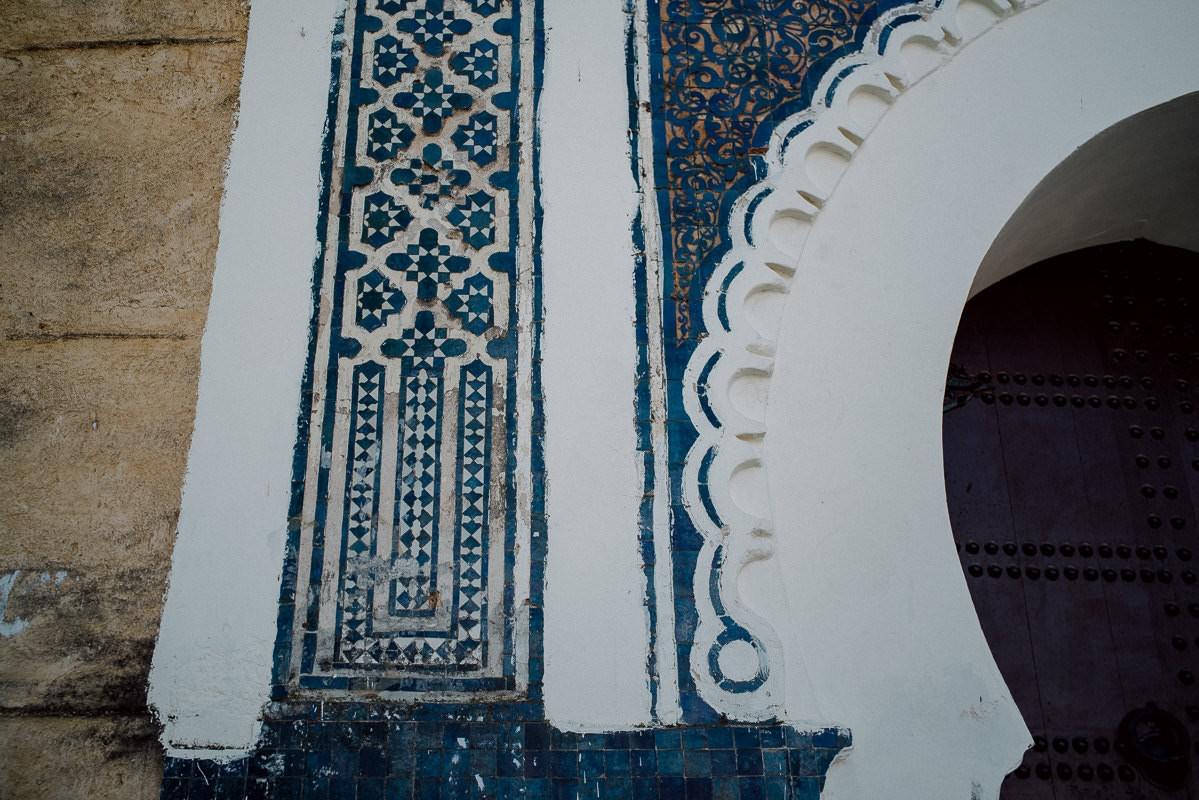
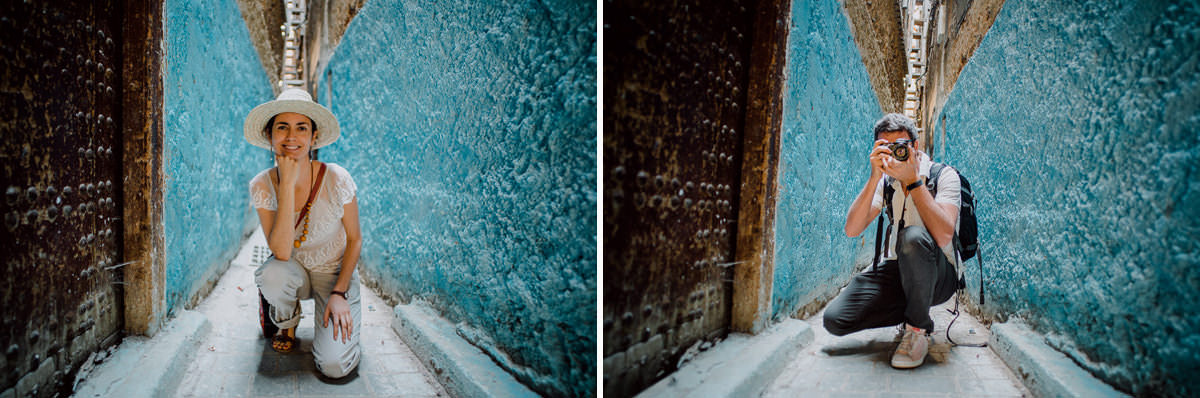
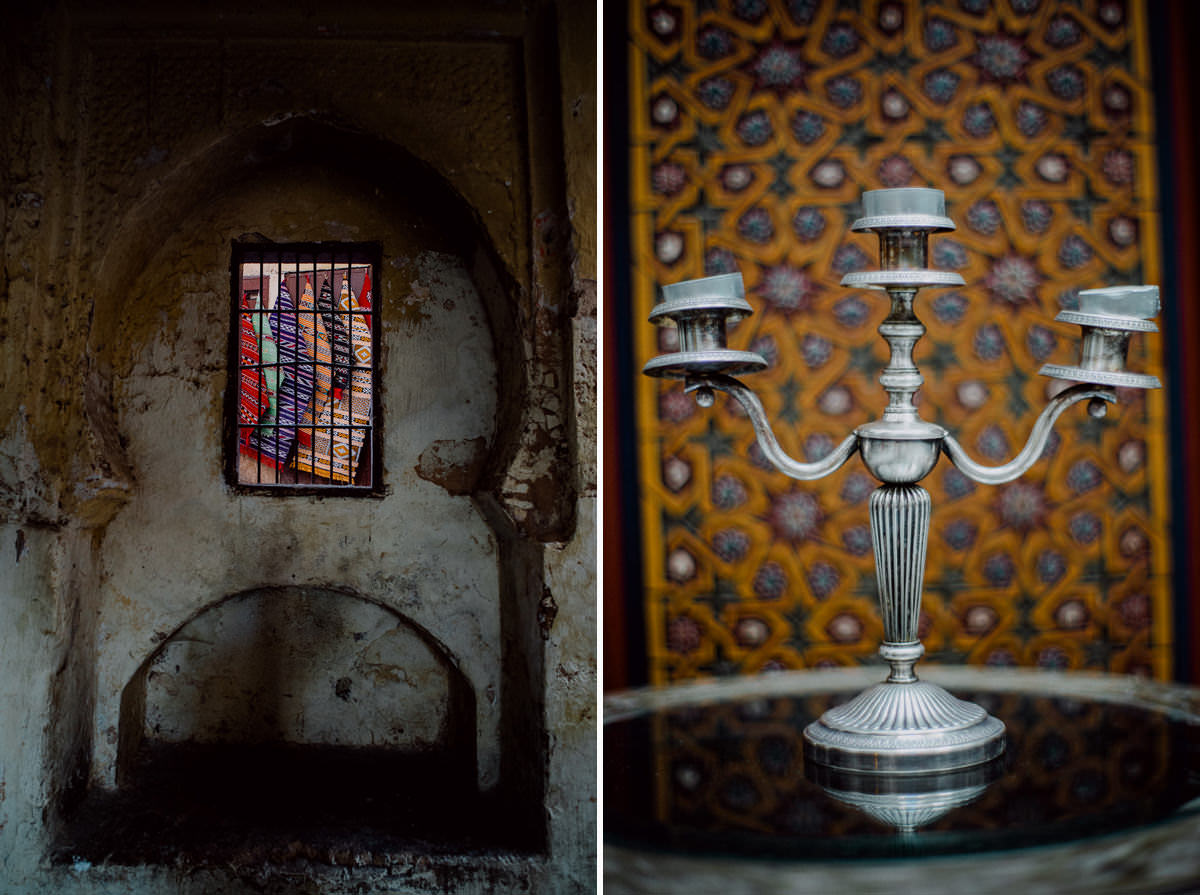
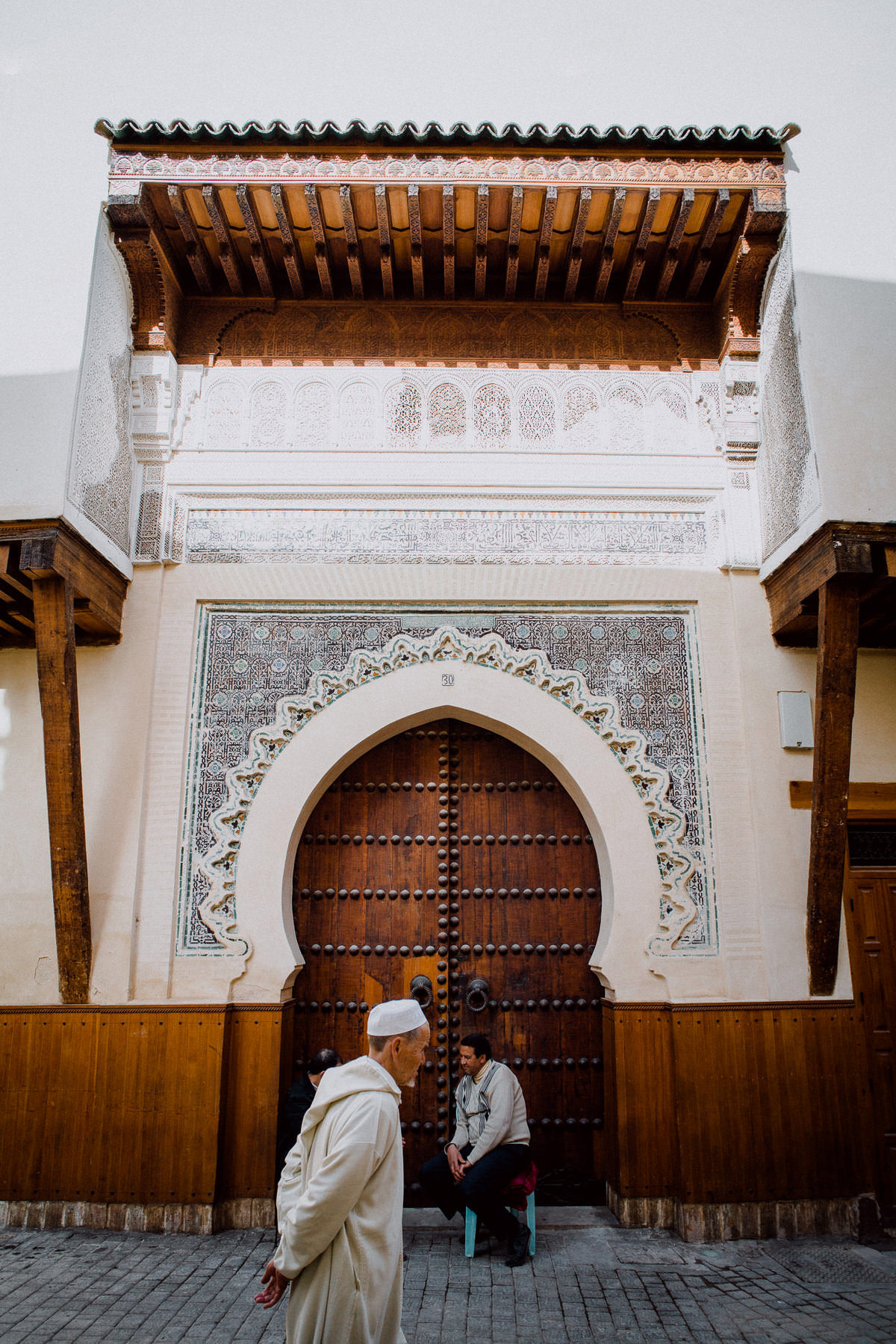
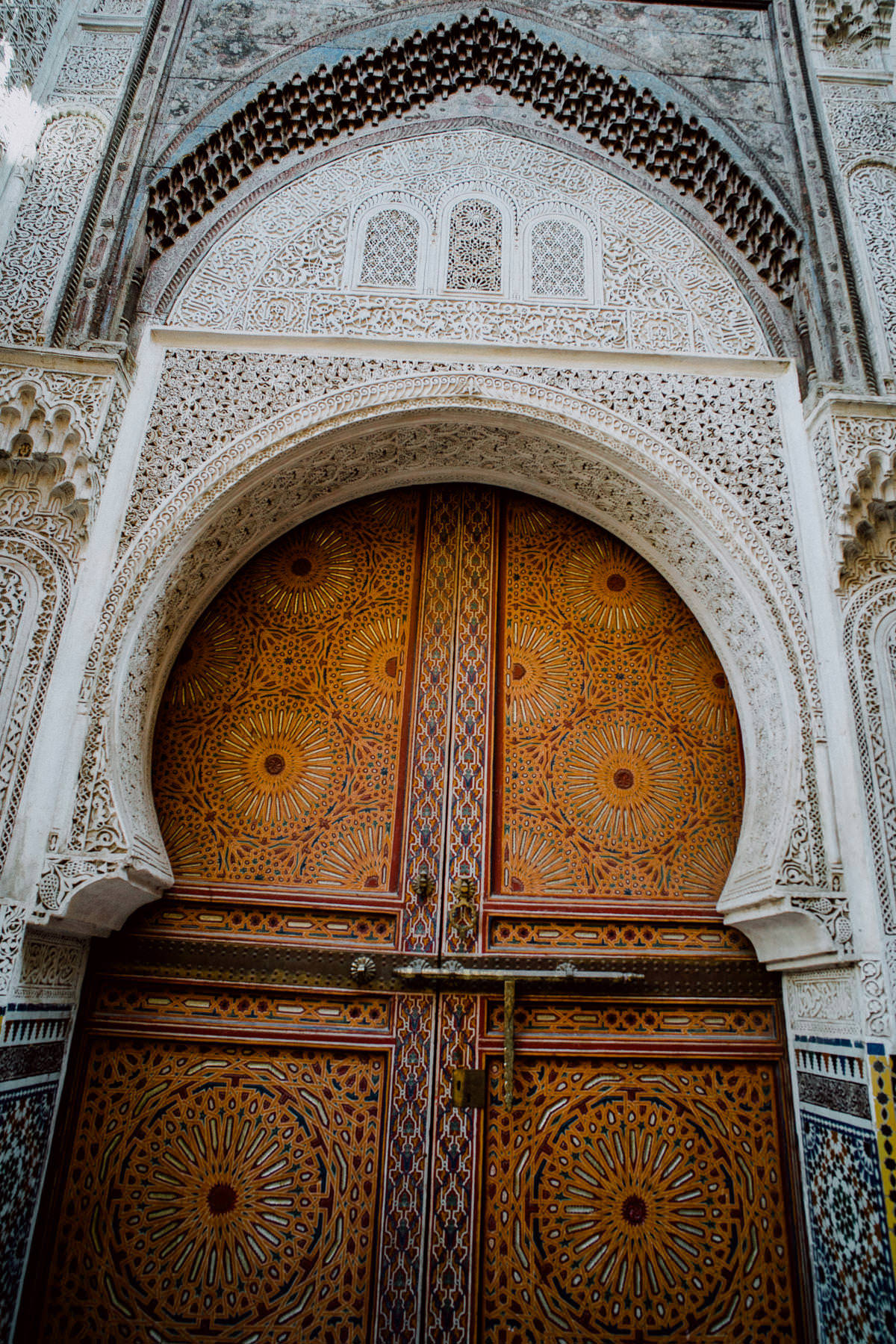
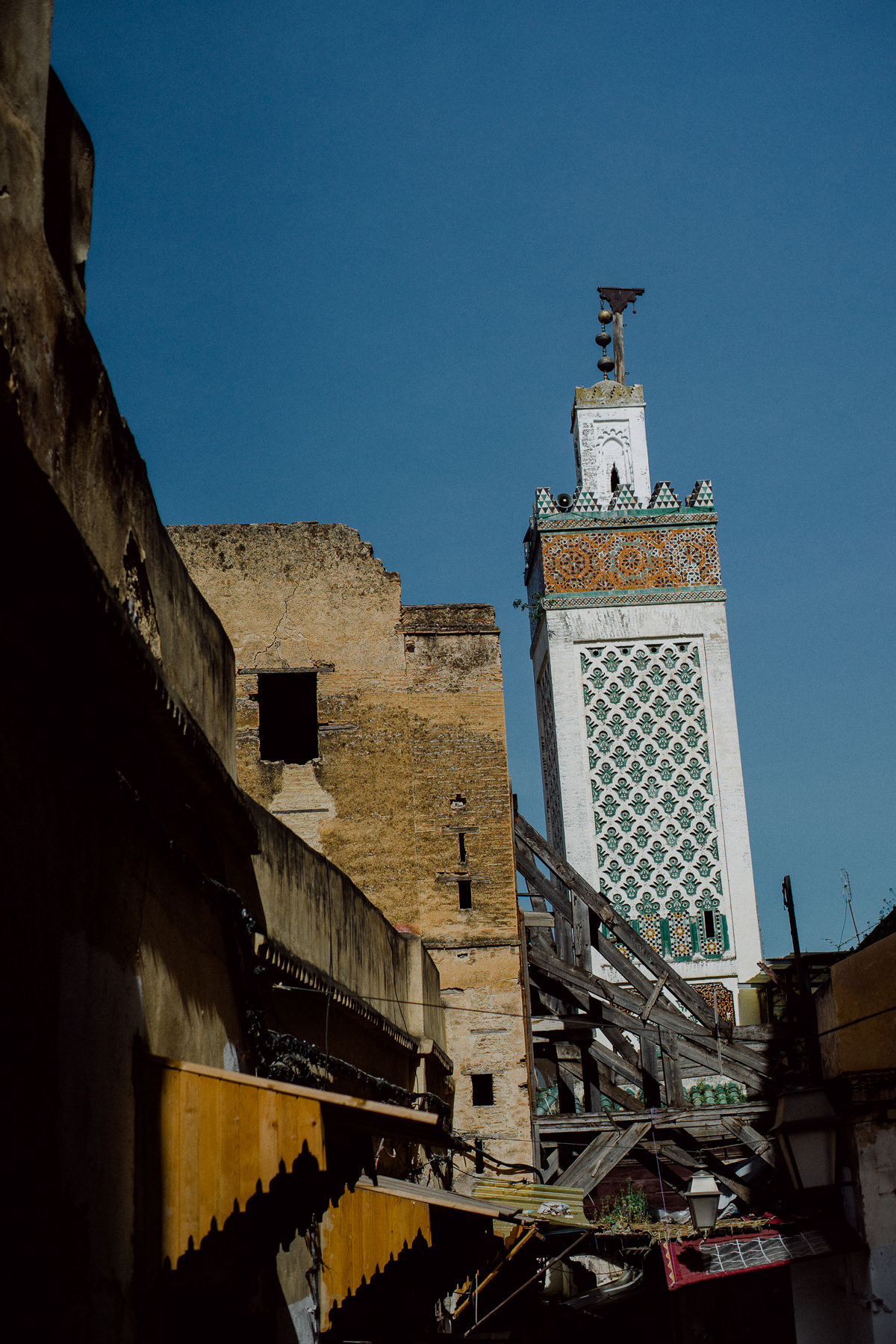
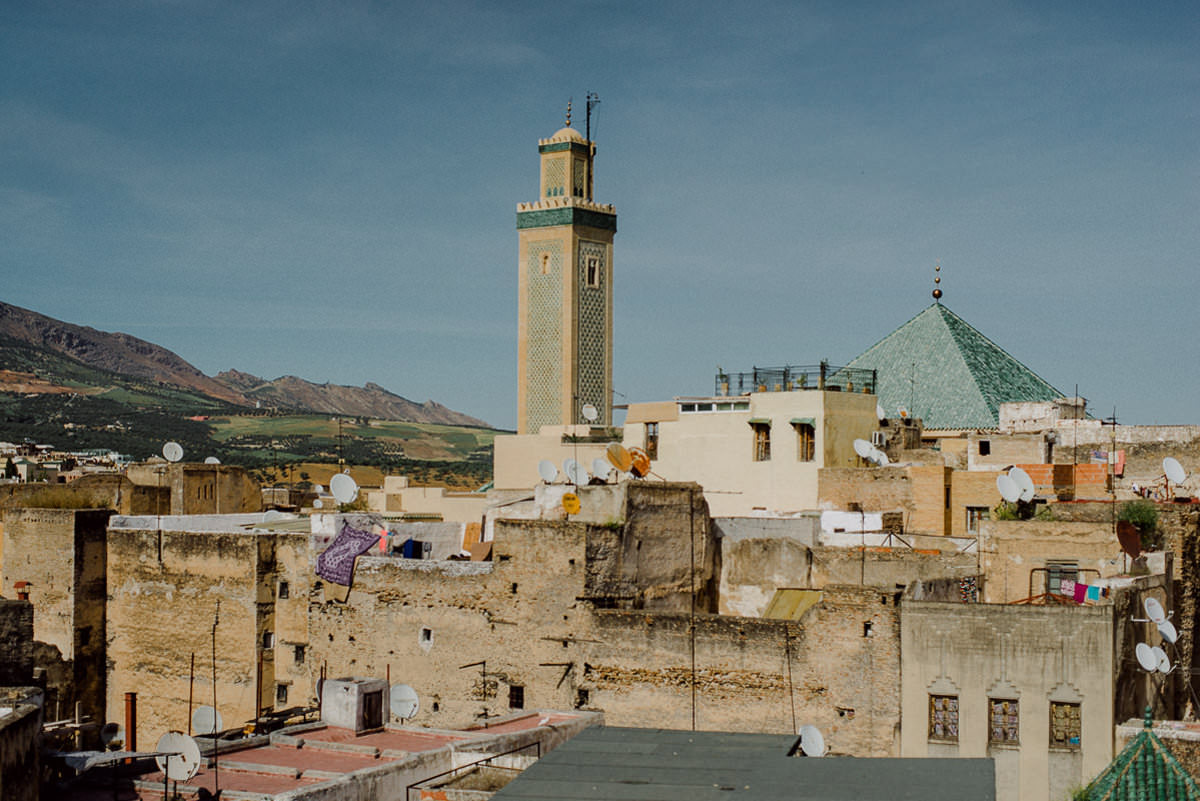
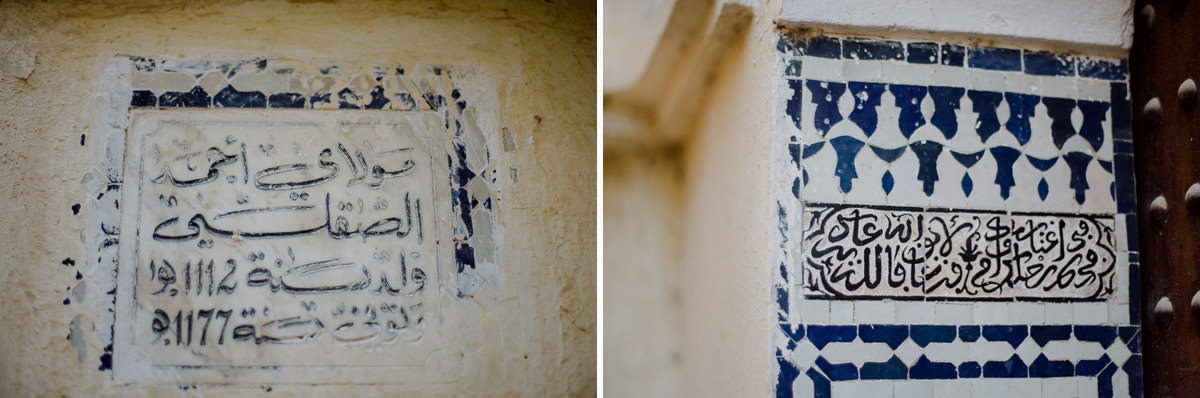
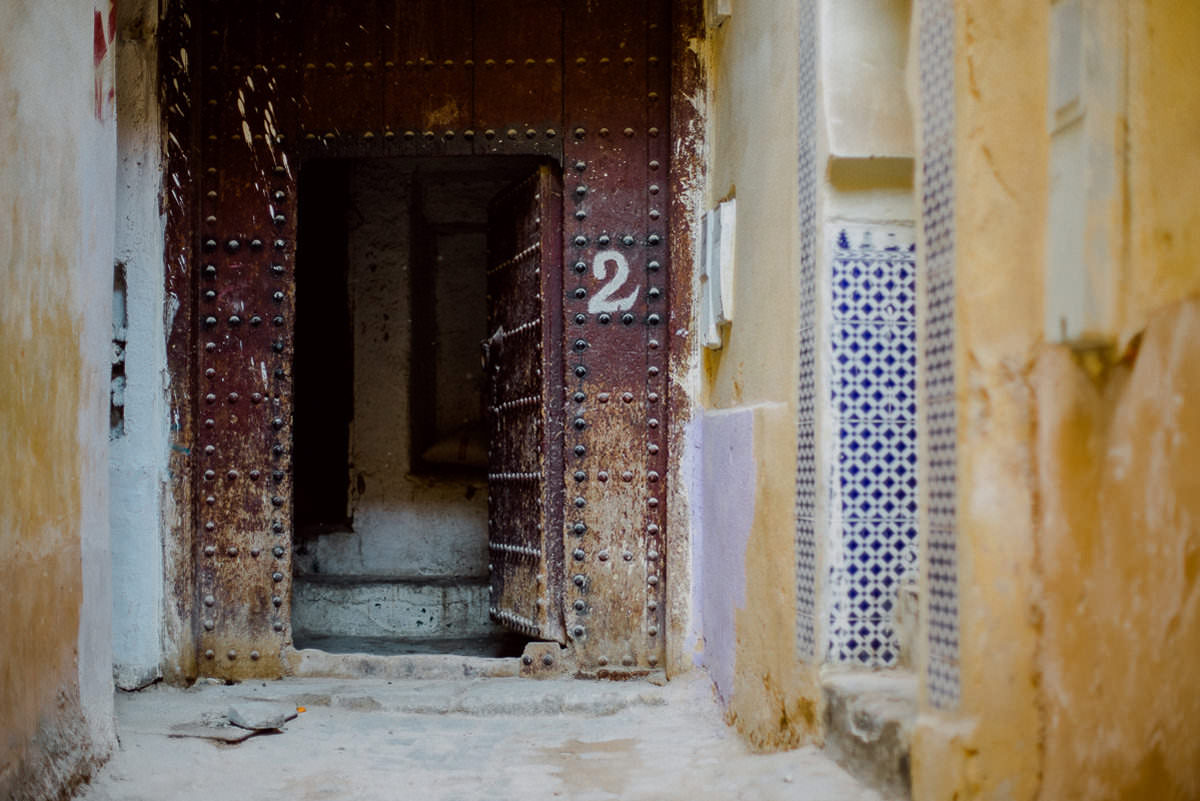
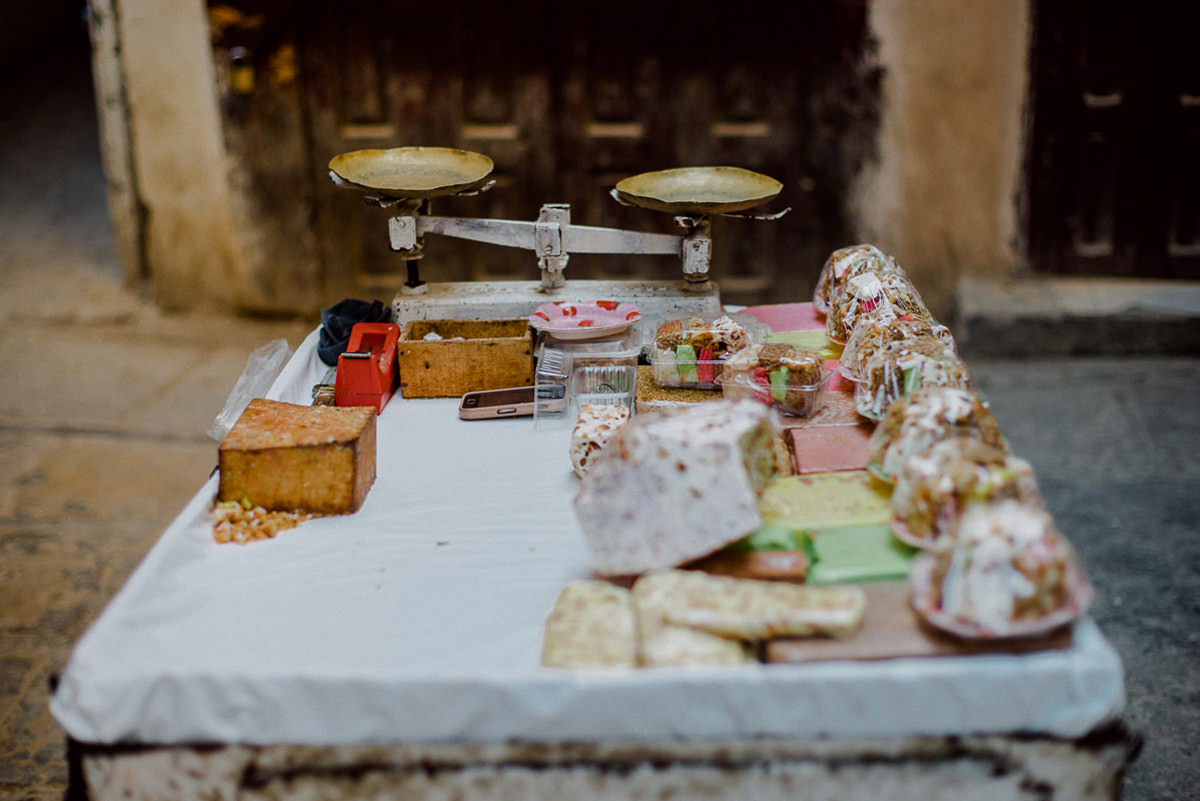
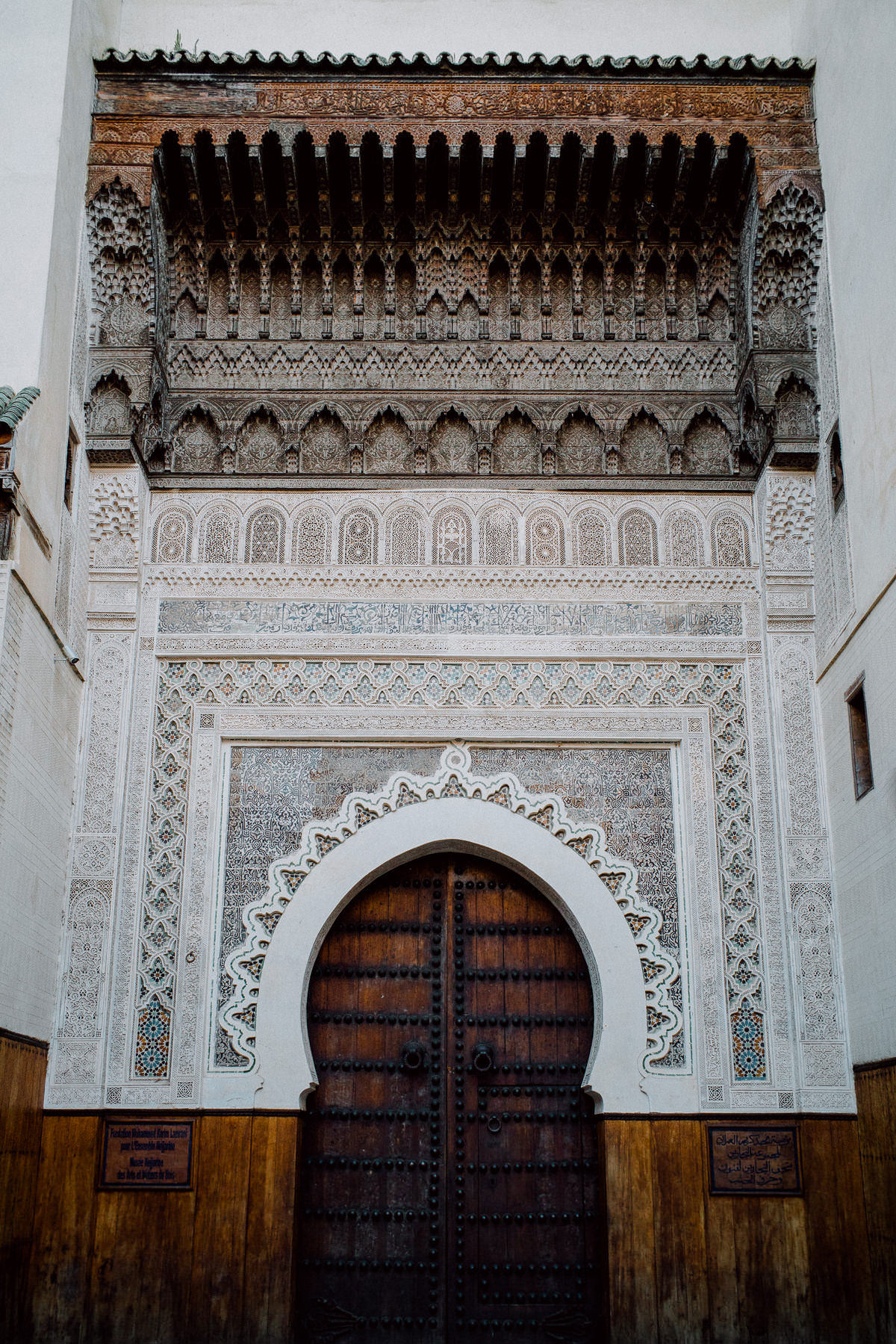
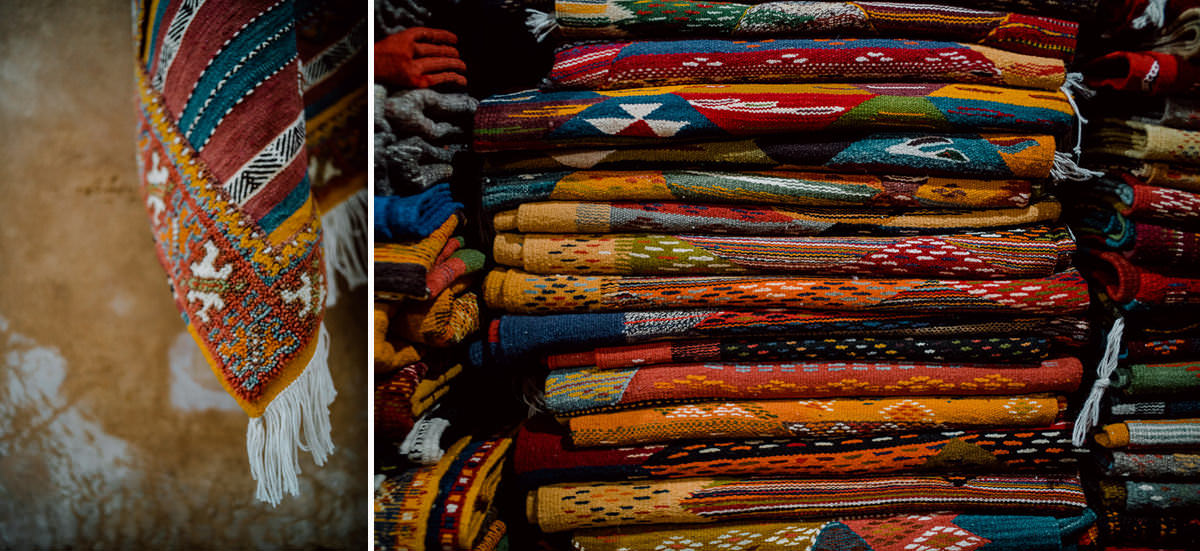
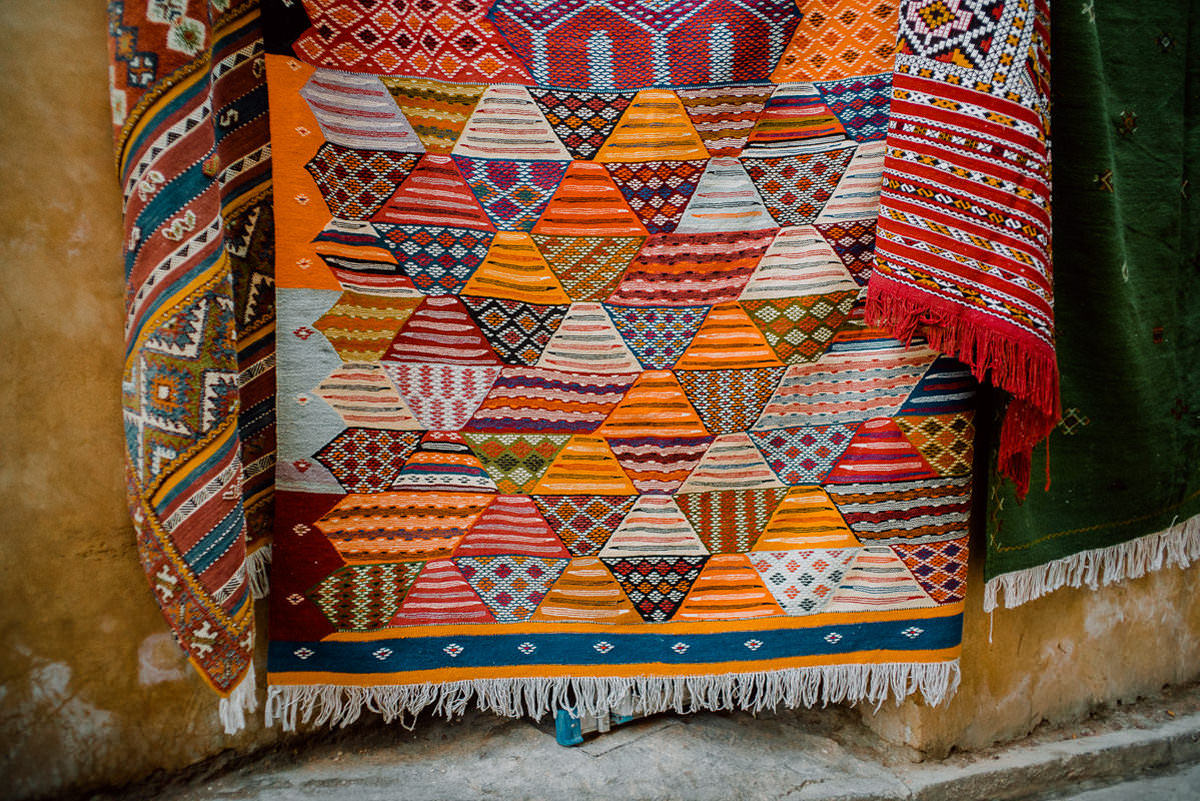
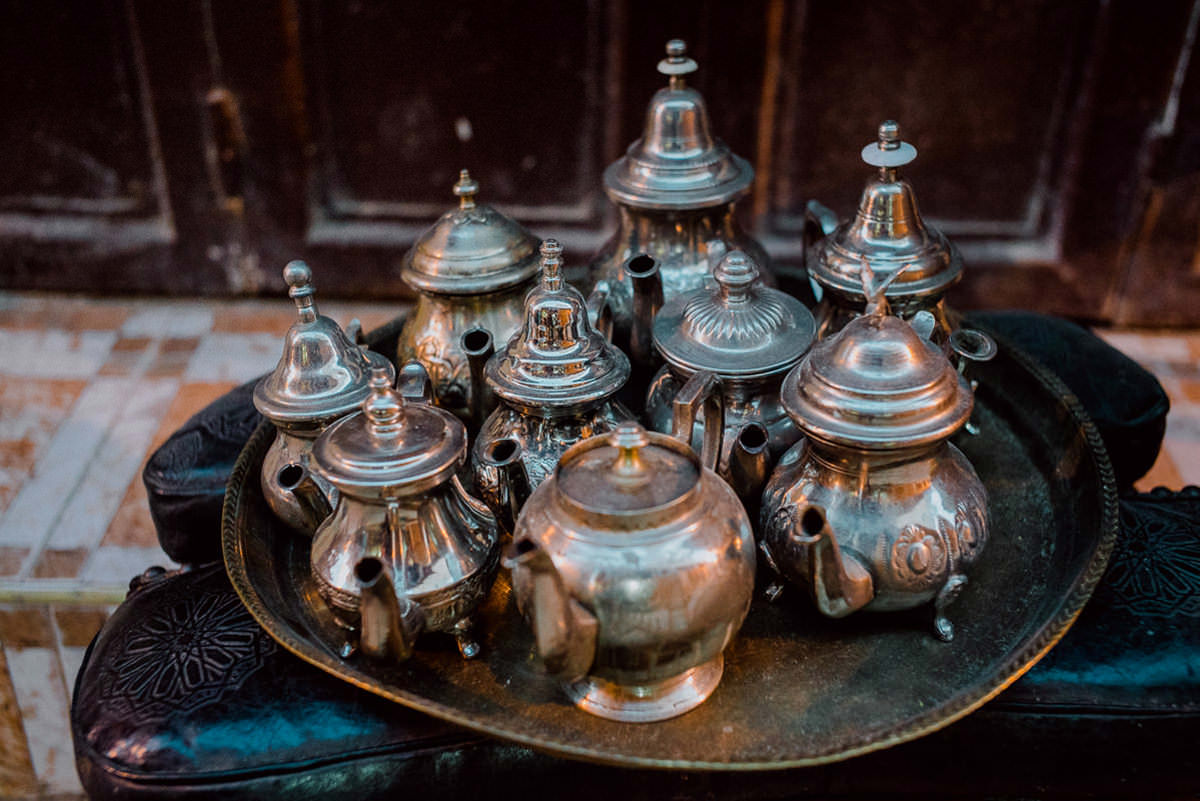
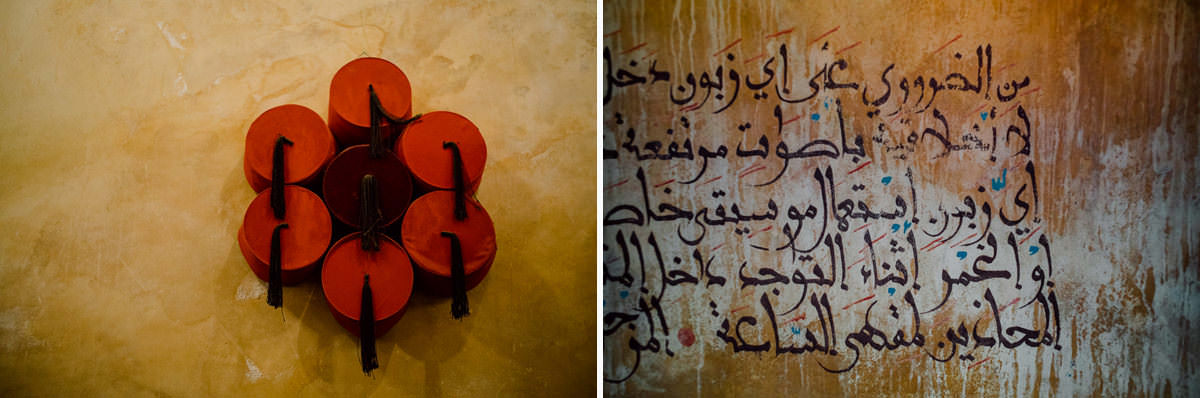
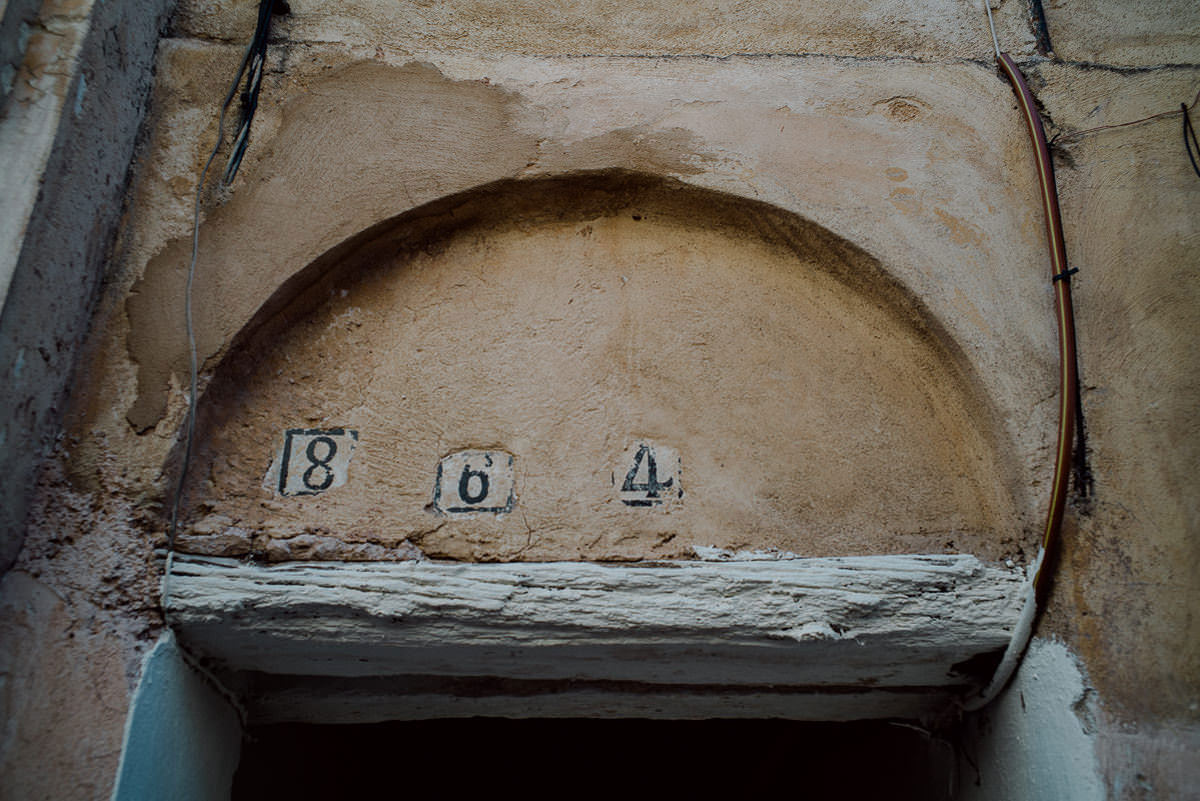
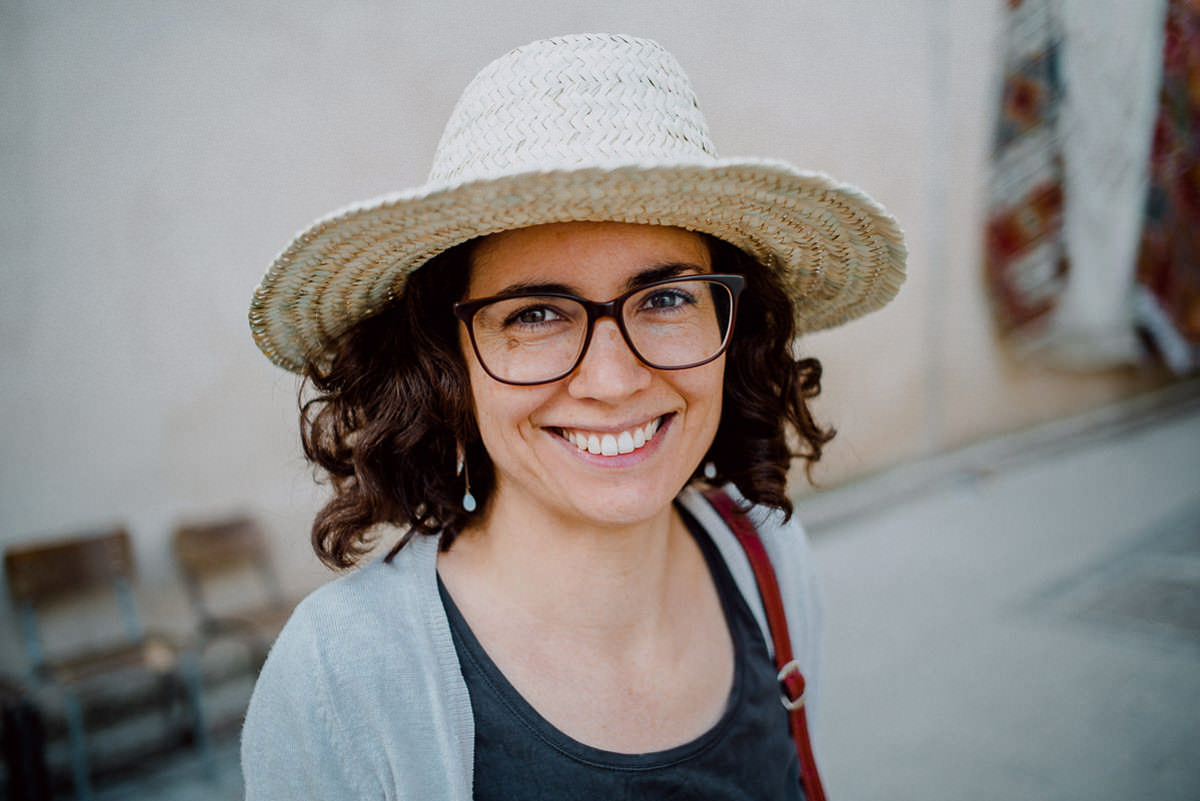
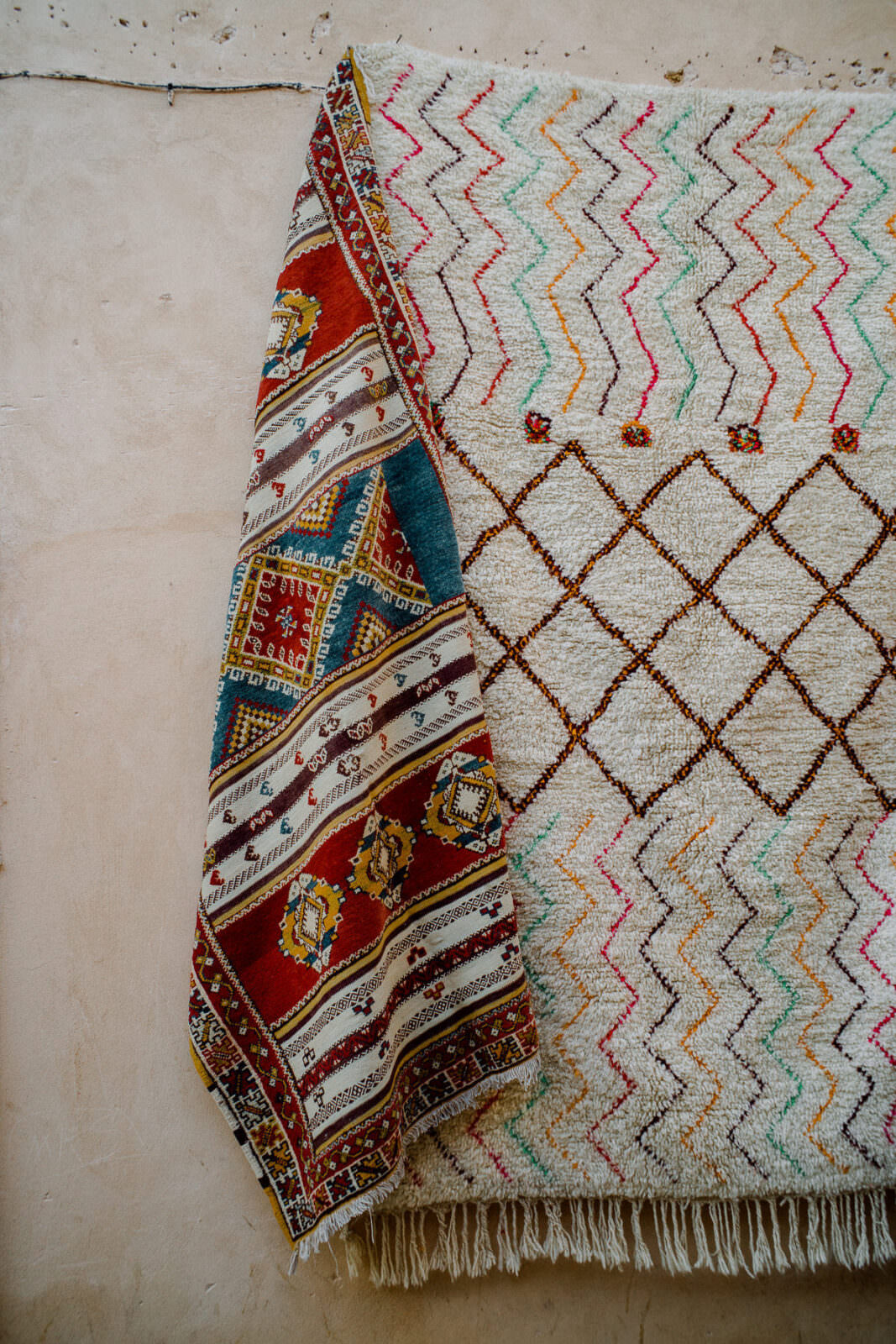
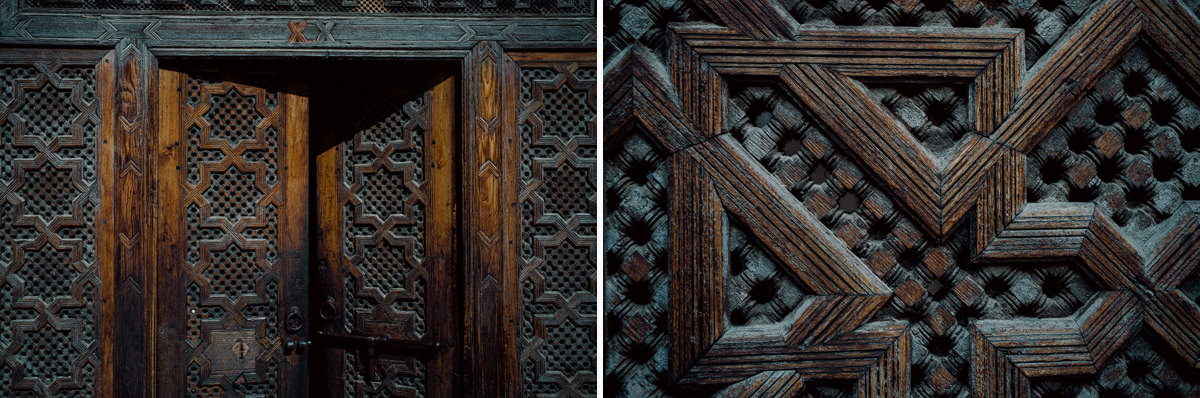
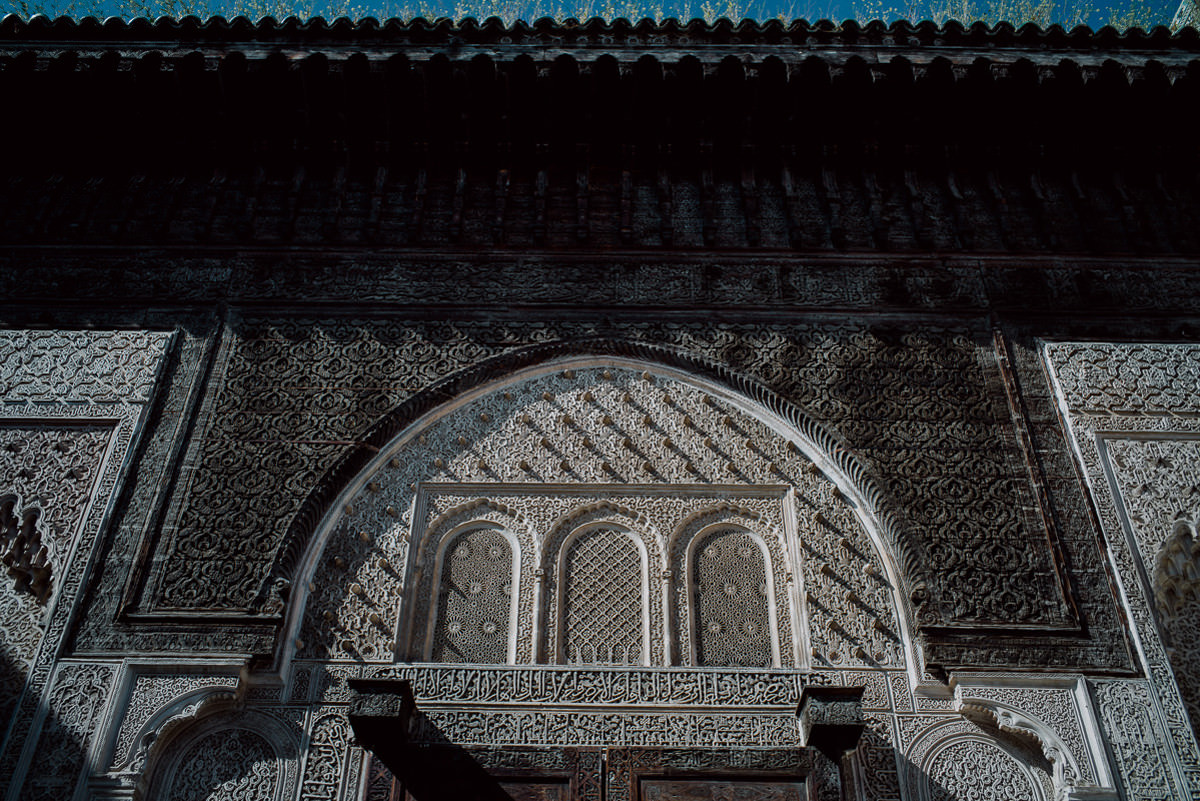
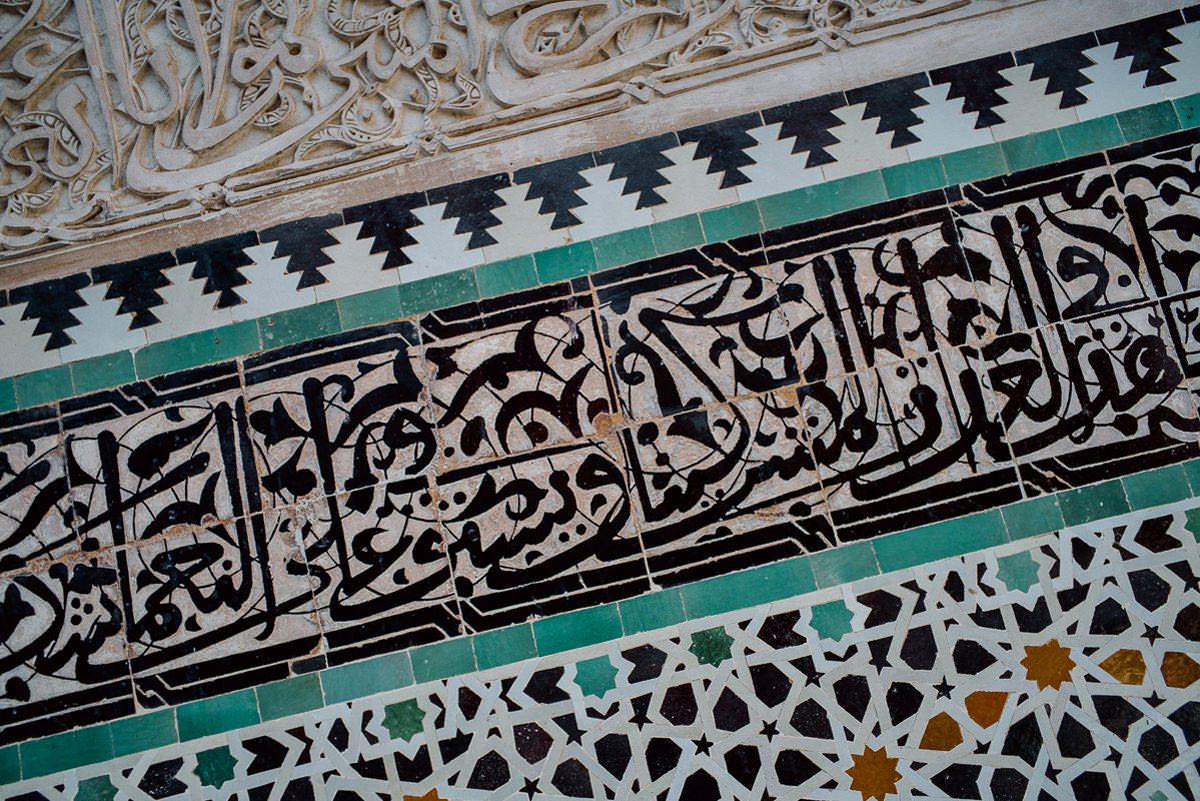
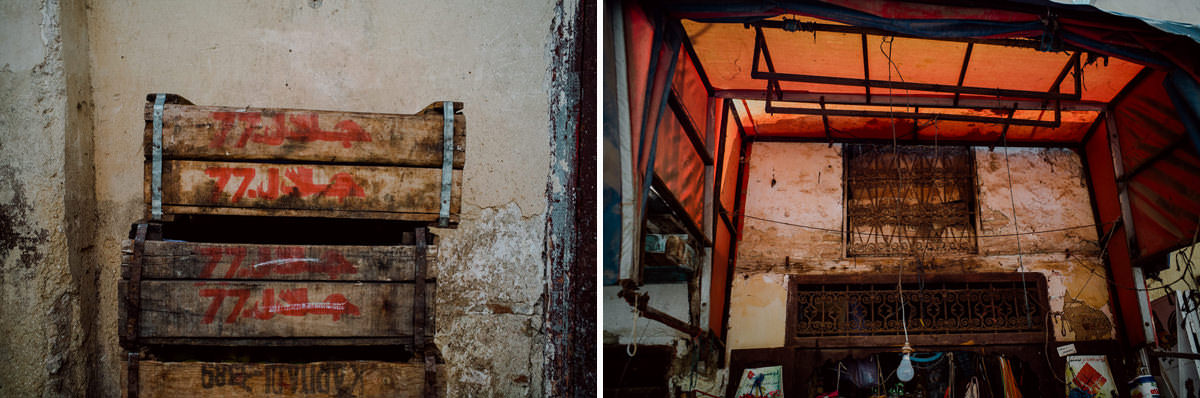
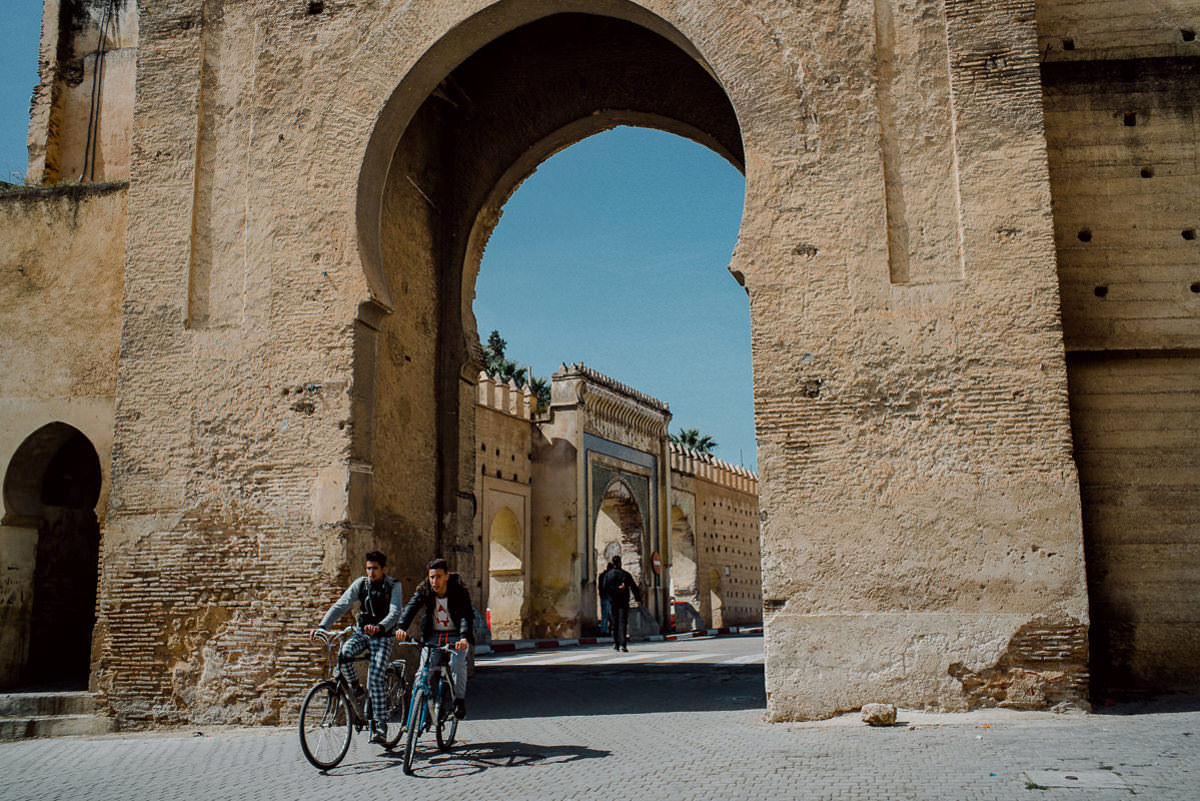
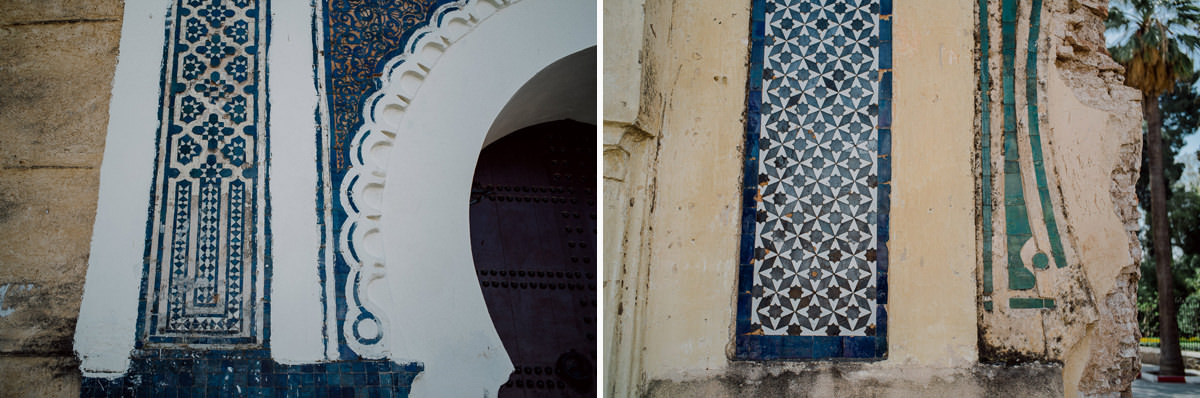
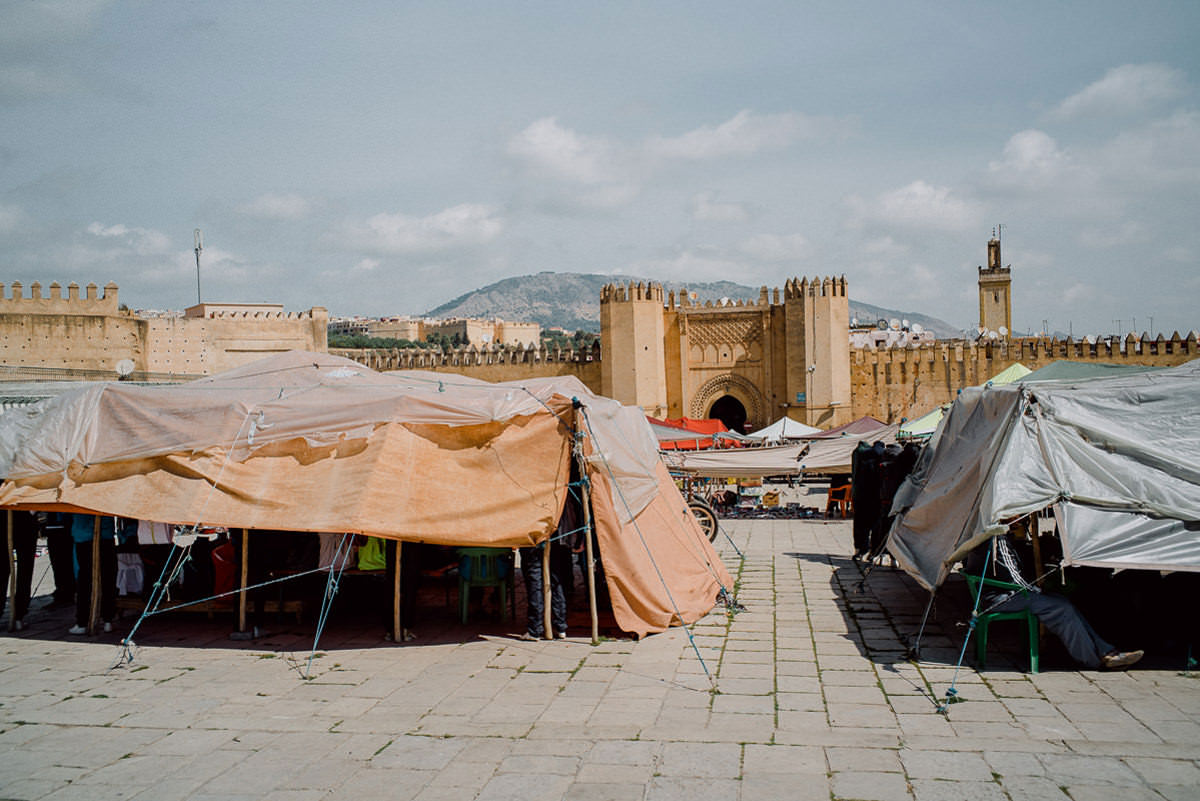
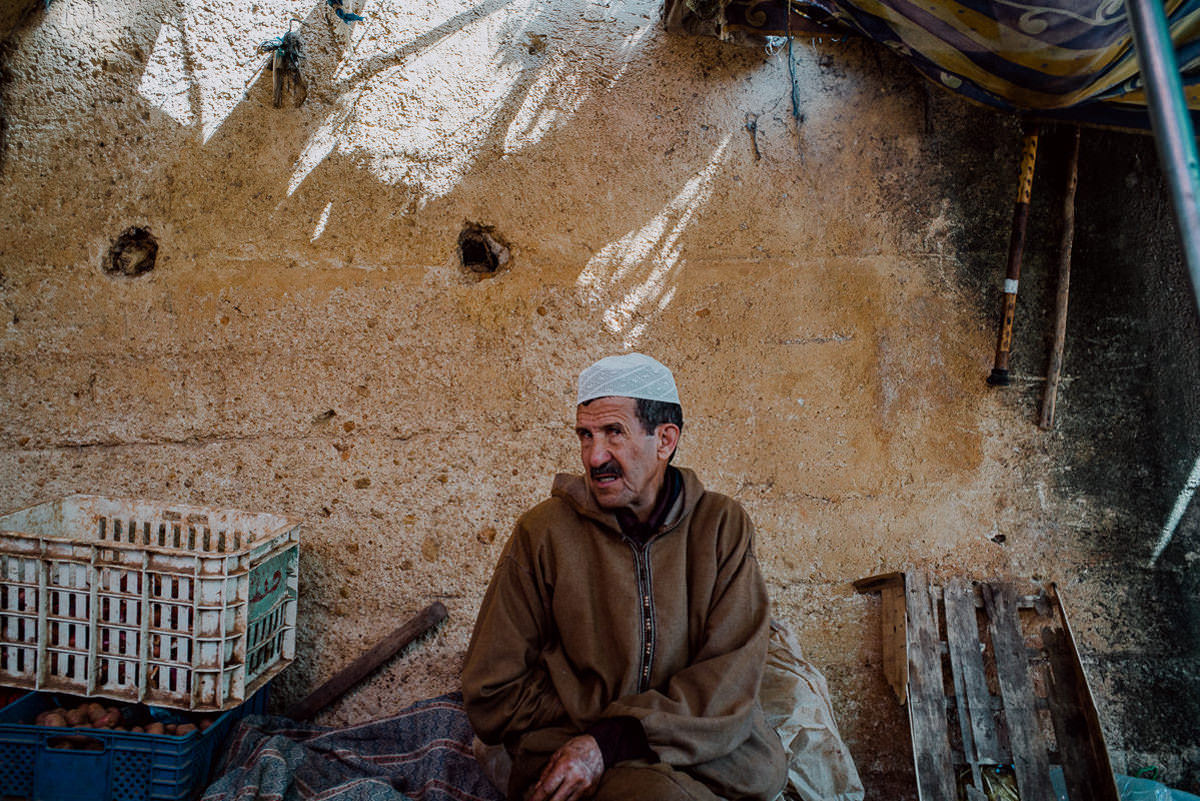
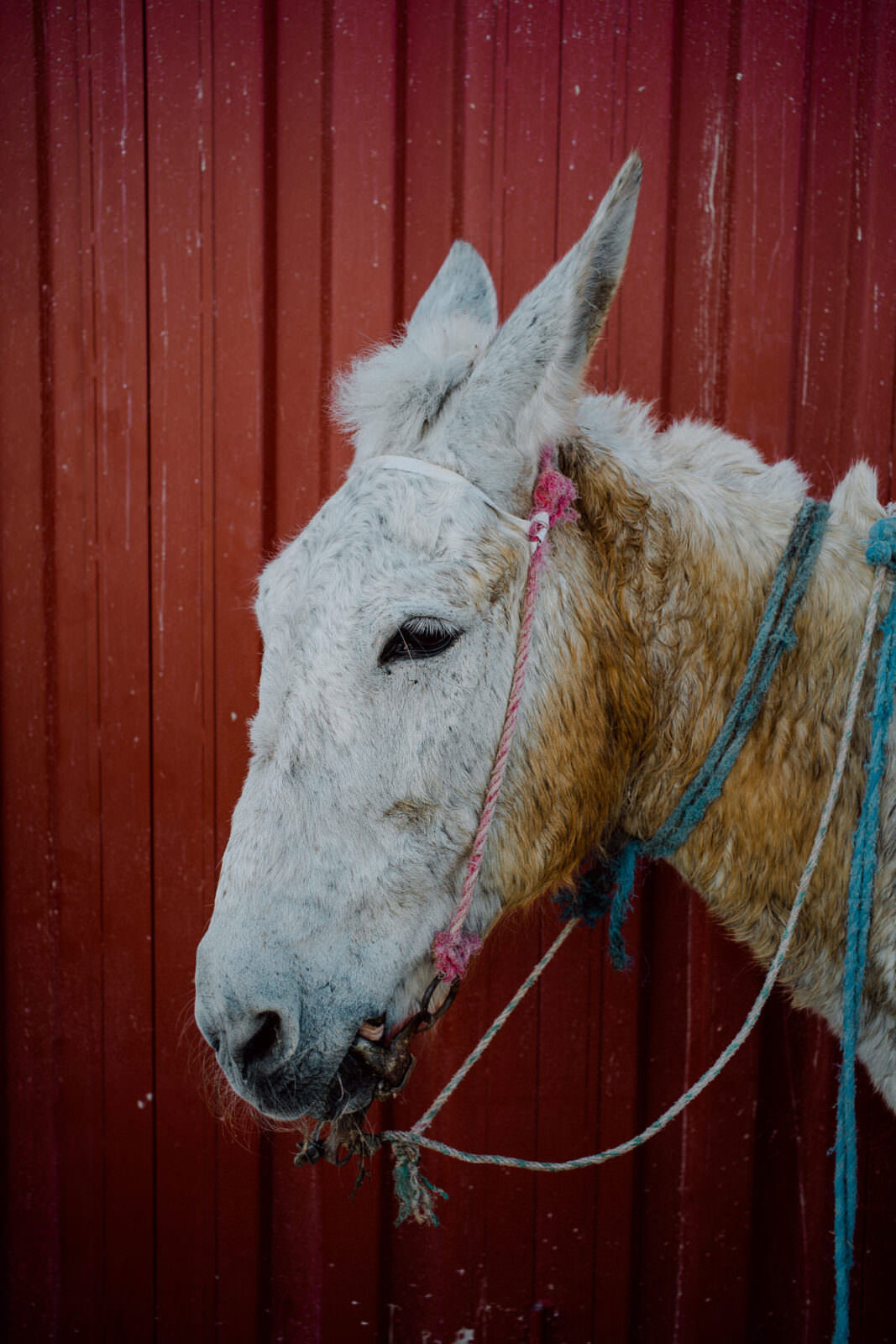
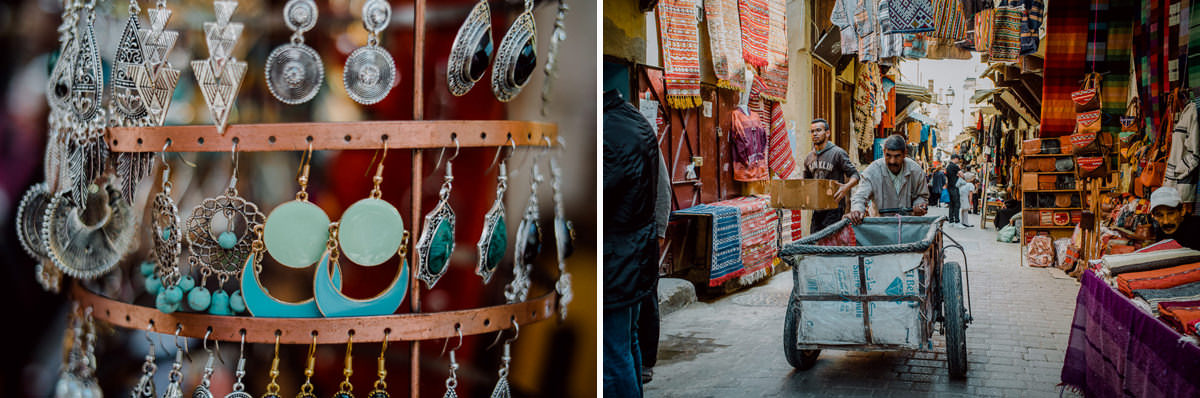
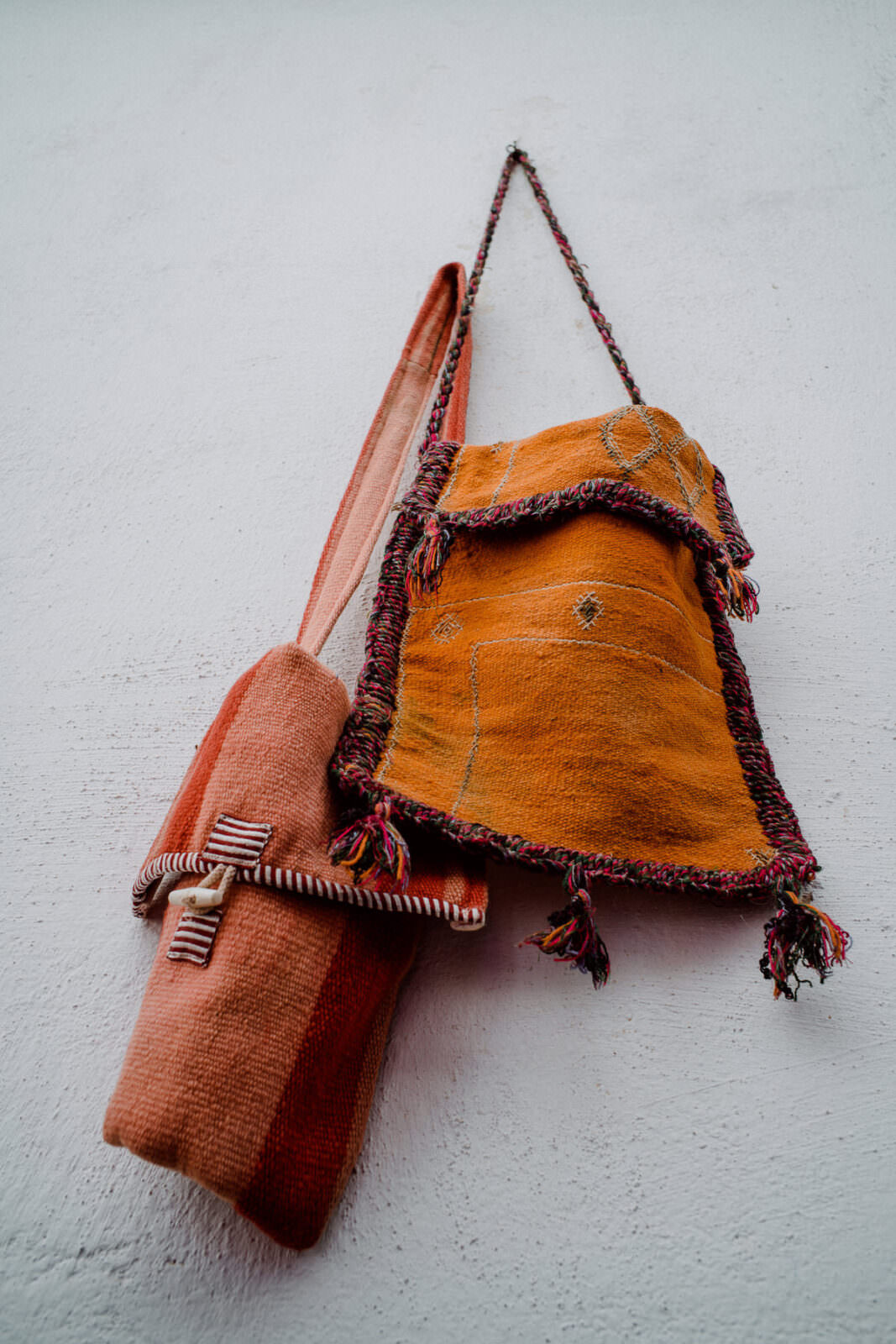
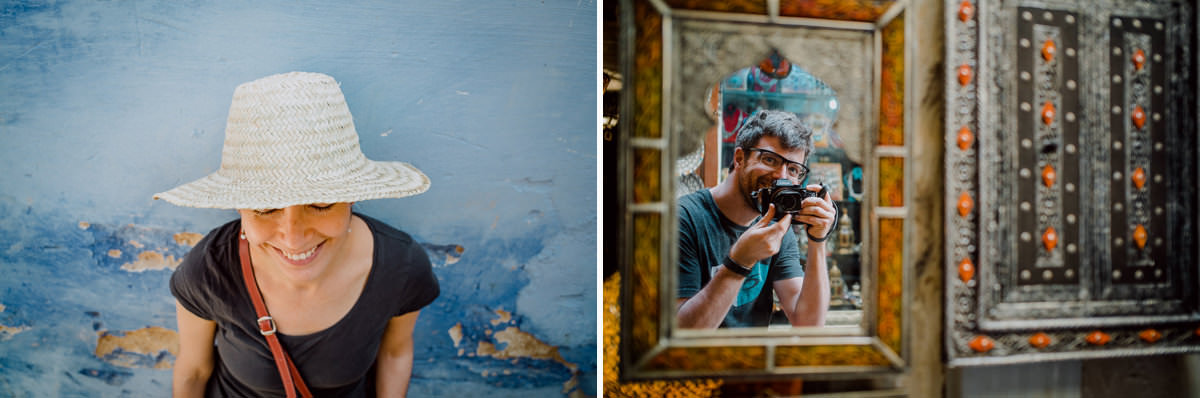
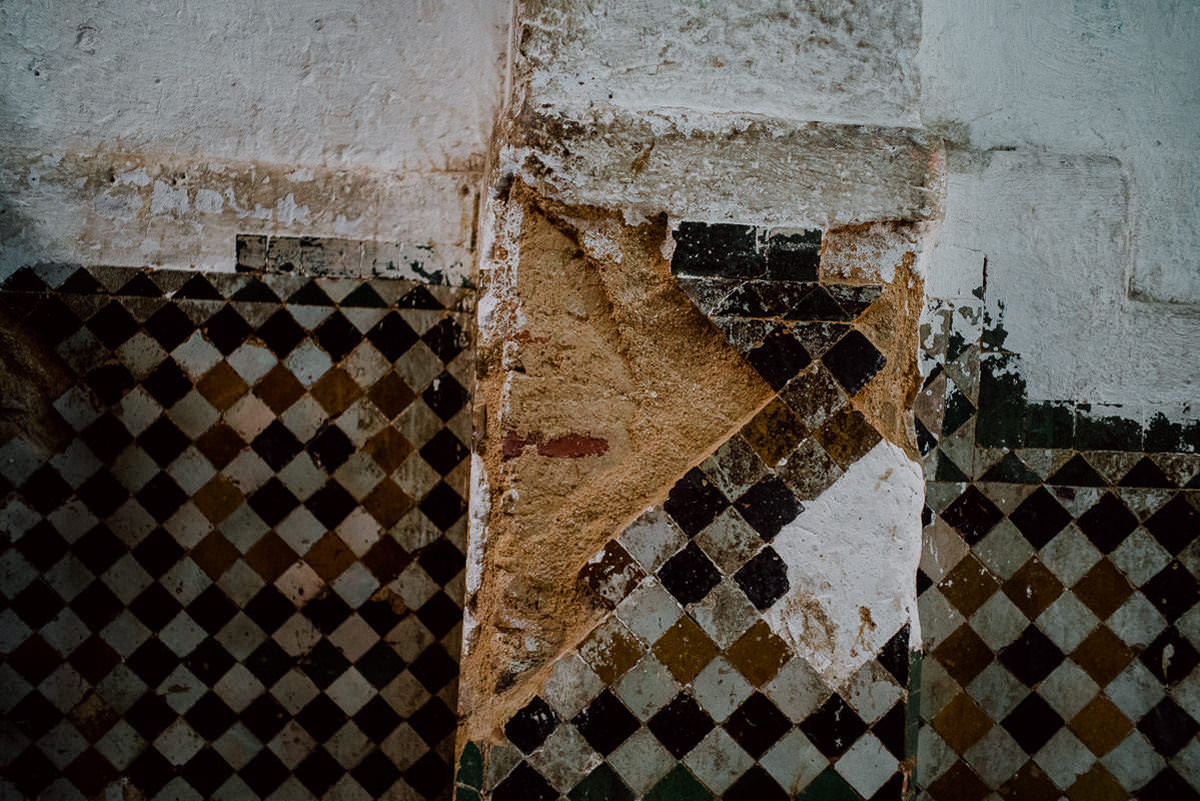
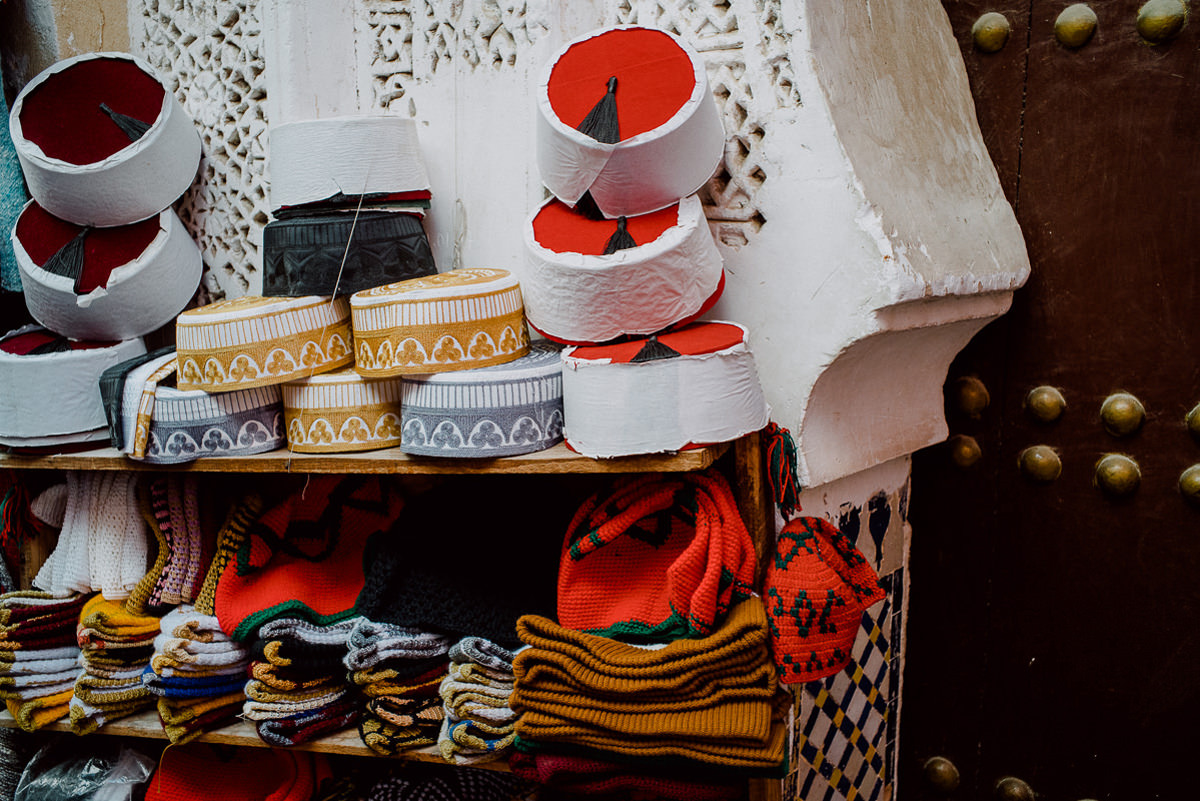
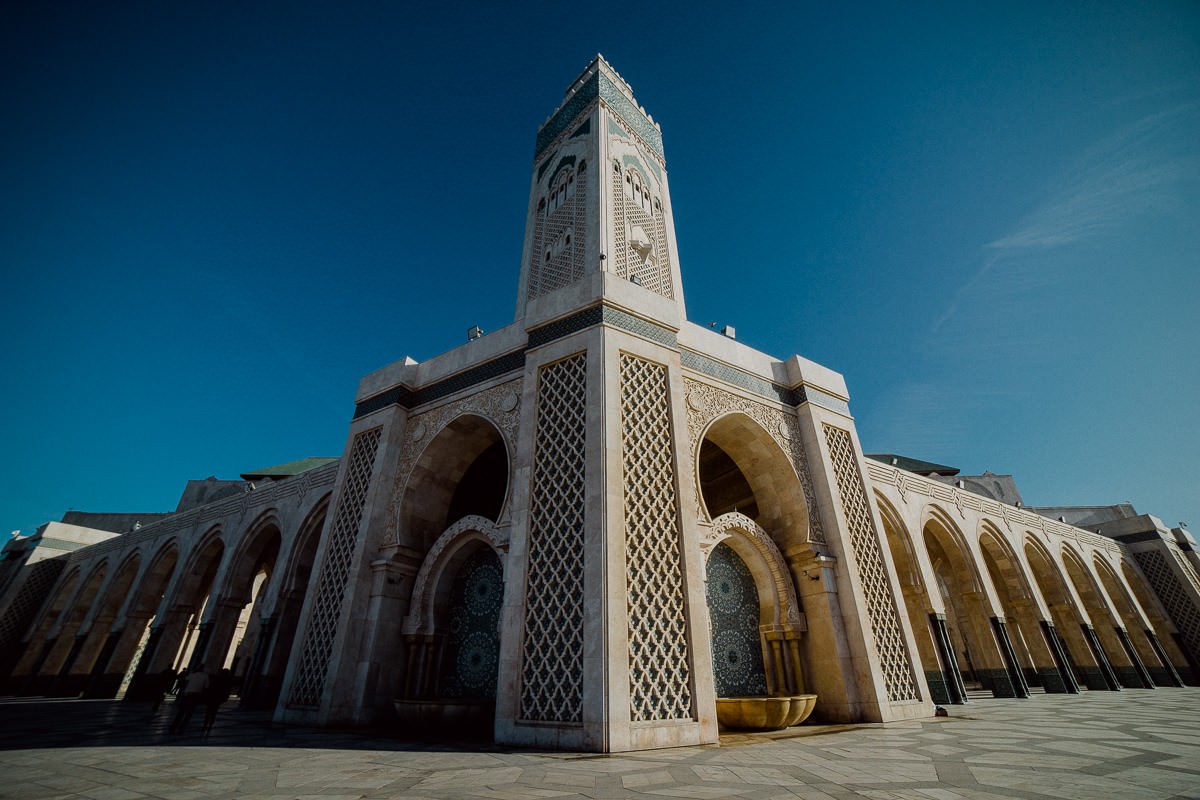
Rock, trees and barren slopes – the drive to Fès reminded me of Tibet.A low house on the steppe and trees on the slope.Tall conifers, a small figure on the path below.A dark herd on the scree slope and a last patch of snow.A barren plateau, a grazing animal and a farmstead on the ridge.Sheep in front of crumbling stone walls, bare hills behind.Blue tiles in the alley – she poses, he kneels with the camera.A zellige rosette beneath a white stucco arch on a wall fountain.A barred arched window and a silver candlestick.Two men in front of a studded gate beneath a wooden canopy.The tannery from above: dyeing vats and hanging hides in the heart of the medina.A carved wooden door with golden rosettes beneath a stucco arch.A minaret with green latticework above the narrow alley.Le petit palais traditionnel and the tiled sign Derb Tahri – of course we got lost a few times.A minaret and a green pyramid roof above the rooftops of Fès.Round stone vats, pale basins and the medina behind – the tannery still works like this today.Round dyeing vats and pale rectangular basins, side by side.Blue, green and brown in the dyeing vats, a tanner at the edge – the smell is not for every nose.A weathered stucco inscription and blue zellige with lettering.An old studded wooden door, the number 2 beside it.A balance scale and pale blocks of sweets on the market stall.The portal of the Musée Nejjarine with its muqarnas canopy.Colourful woven rugs piled high.A rug with a triangle pattern and fringes on the wall.Silver teapots on a tray in front of the wooden door.Red fezzes arranged like a flower and Arabic script on the wall.The digits 8, 6 and 4 above a plastered arch.Straw hat, glasses and a smile in the alley.A rug with a zigzag pattern and a colourful border.A carved wooden door and a geometric wooden relief.A stucco façade with a horseshoe arch and three small arches.Black calligraphy on zellige beneath a stucco frieze.Wooden crates with red lettering and a shop under a red roof.A man in a green robe between beans and olives – the vegetable market.Carrots, turnips and eggs, someone napping behind, a boy in red in front.A pale green van and a handcart full of turnips.Two cyclists beneath a tall stone arch, a gate behind.Zellige on a horseshoe arch, two close-ups.Market tents in front of a gate between two towers.A man with herbs and a stall with carrots and cabbage.A man in a white cap in front of the clay wall.A donkey's head with a rope halter in front of a red door.The magnificent Bab Bou Jeloud gate with its blue tiles, the medina beyond.Earrings on a stand and a handcart in the alley.An orange and a red leather bag on the white wall – dyed like in the tanneries.A smile beneath a straw hat and the photographer in the mirror.Flaking plaster above a black-and-white tile pattern.Red fezzes and folded fabrics stacked on a stall.