On the Way to Mývatn

After the East Fjords we went on into the geothermal area at Mývatn and to the famous Goðafoss waterfall. The smell of sulphur still lingers in our noses, but the low sun bathed the steaming crater landscape in a beautiful light. Mývatn was created around 2,300 years ago by a large lava eruption, is only 2.5 metres deep on average and owes its name – “midge lake” – to the swarms in summer. At the Goðafoss, the Skjálfandafljót drops 12 metres over a width of 30 metres.

Goðafoss and the craters at Mývatn

Here are a few pictures from this part of our journey.

Snowy mountains in the haze on the way to Mývatn
After the Eastfjords towards Mývatn: snowy mountains in the haze.
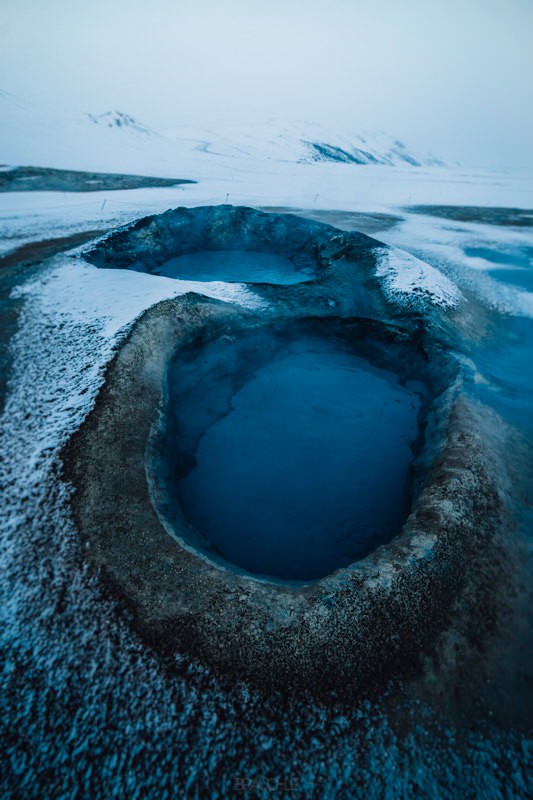
Small crater with water in the snow near Mývatn
A small crater with water in the snow – the smell of sulphur still lingers.
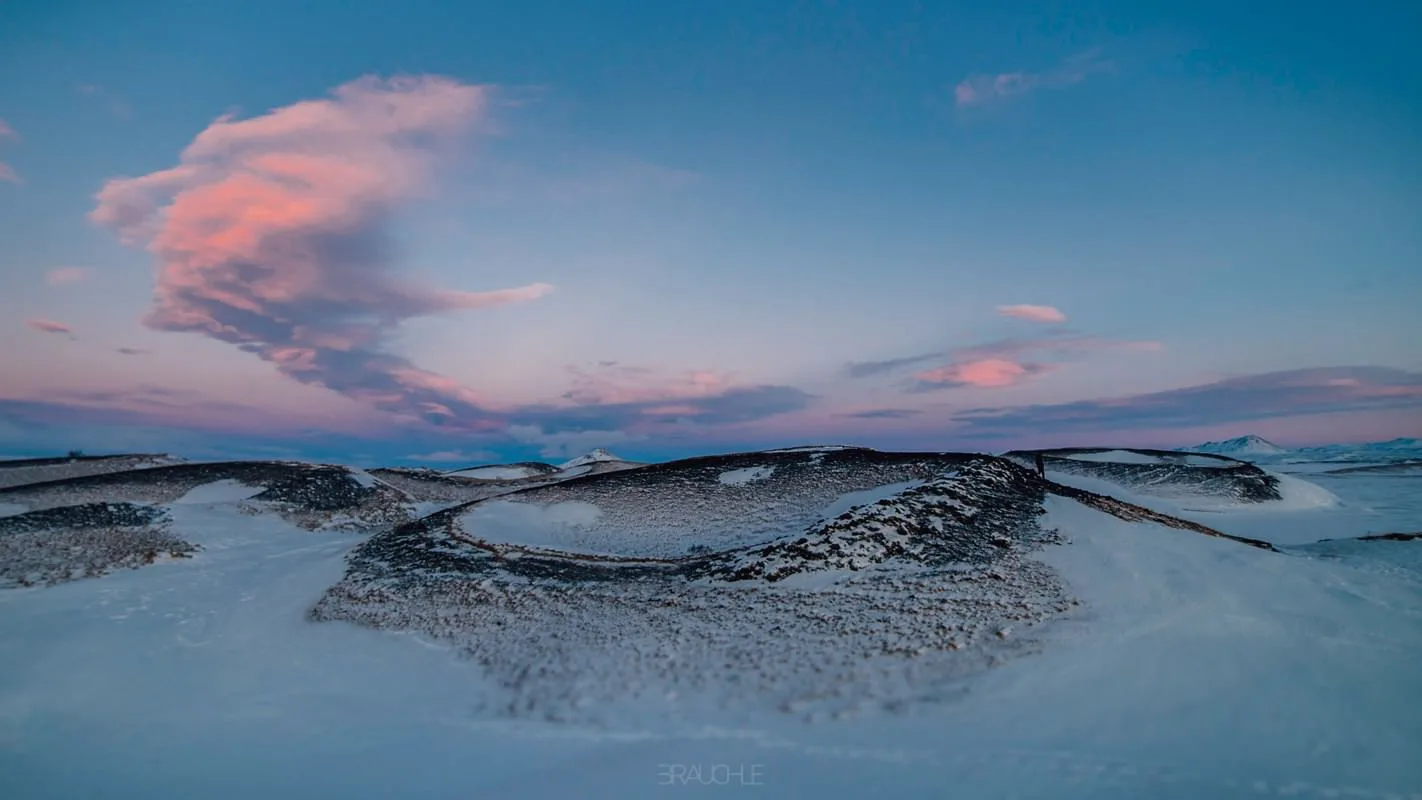
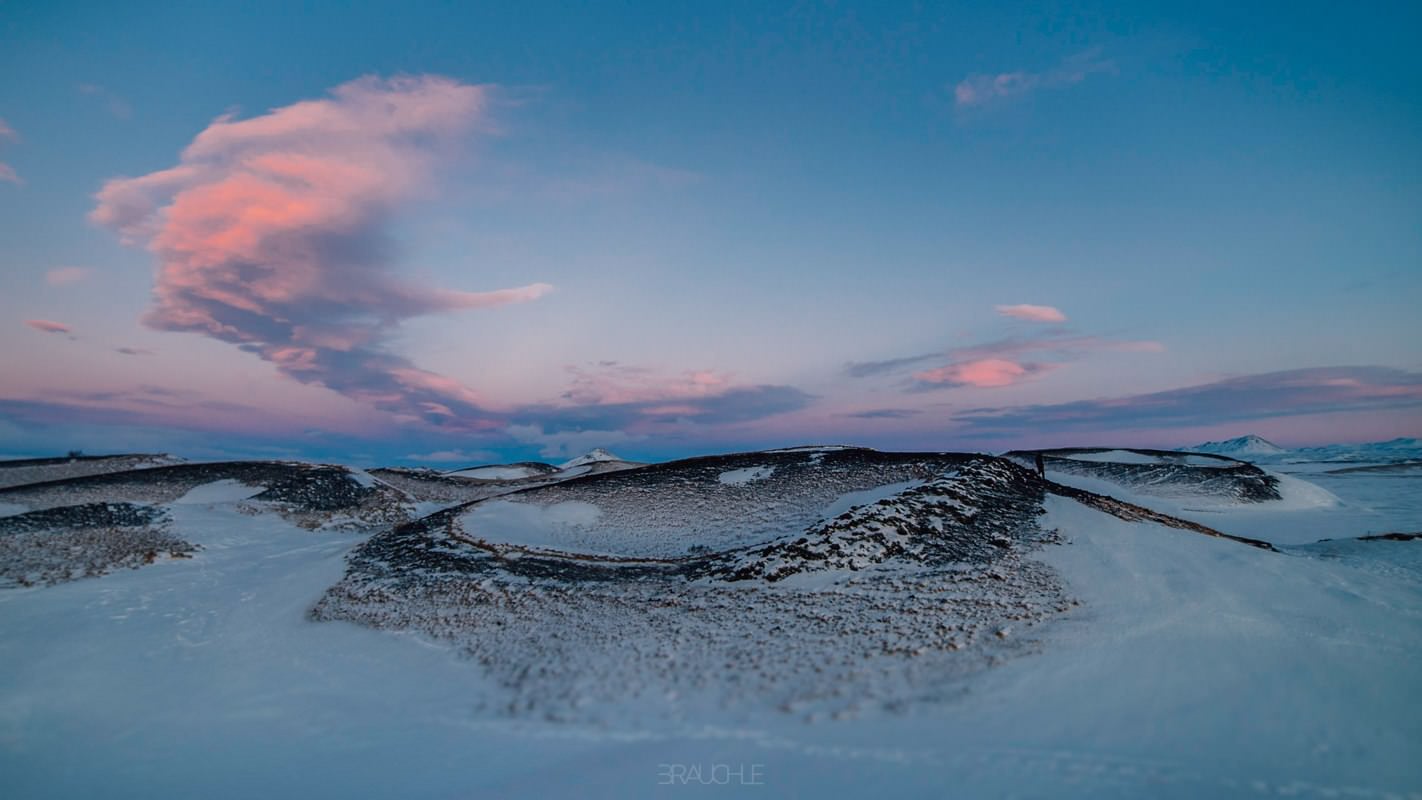
Hverfjall crater in the snow under pink clouds
A crater in the snow beneath pink clouds.
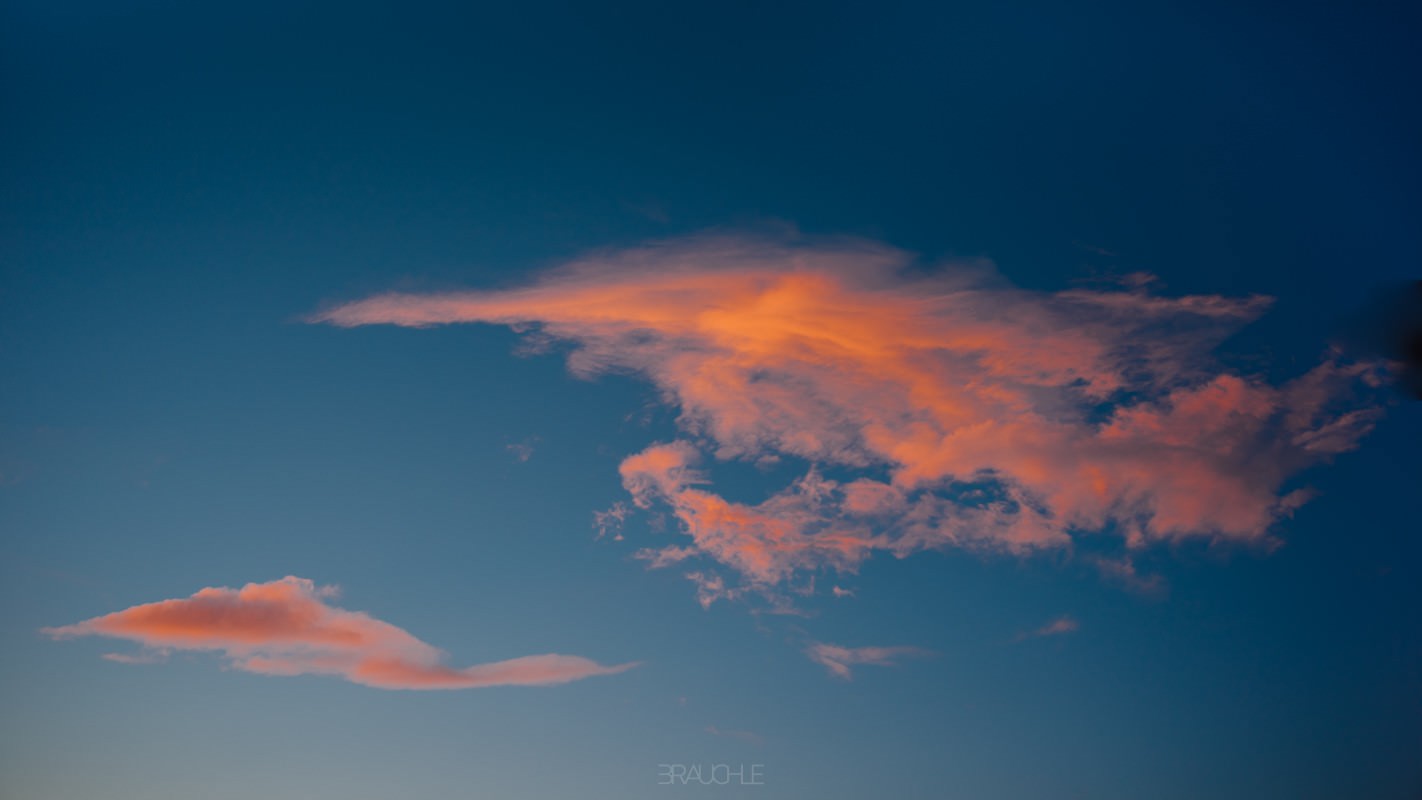
Pink cloud in the blue evening sky over Mývatn
A pink cloud in the blue evening sky.
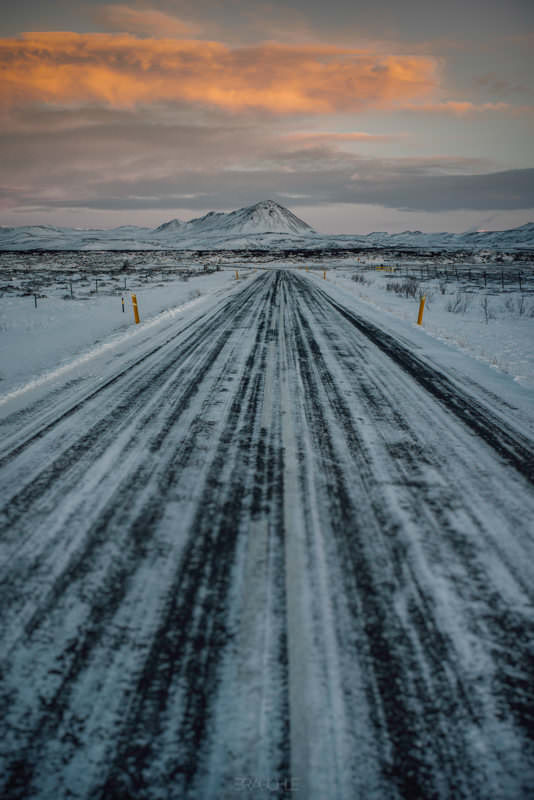
Icy road with ruts on the way to Mývatn
Ruts in the ice on the way to Mývatn.
Car with headlights on a snowy road at dusk
Headlights on the snowy road at dusk.
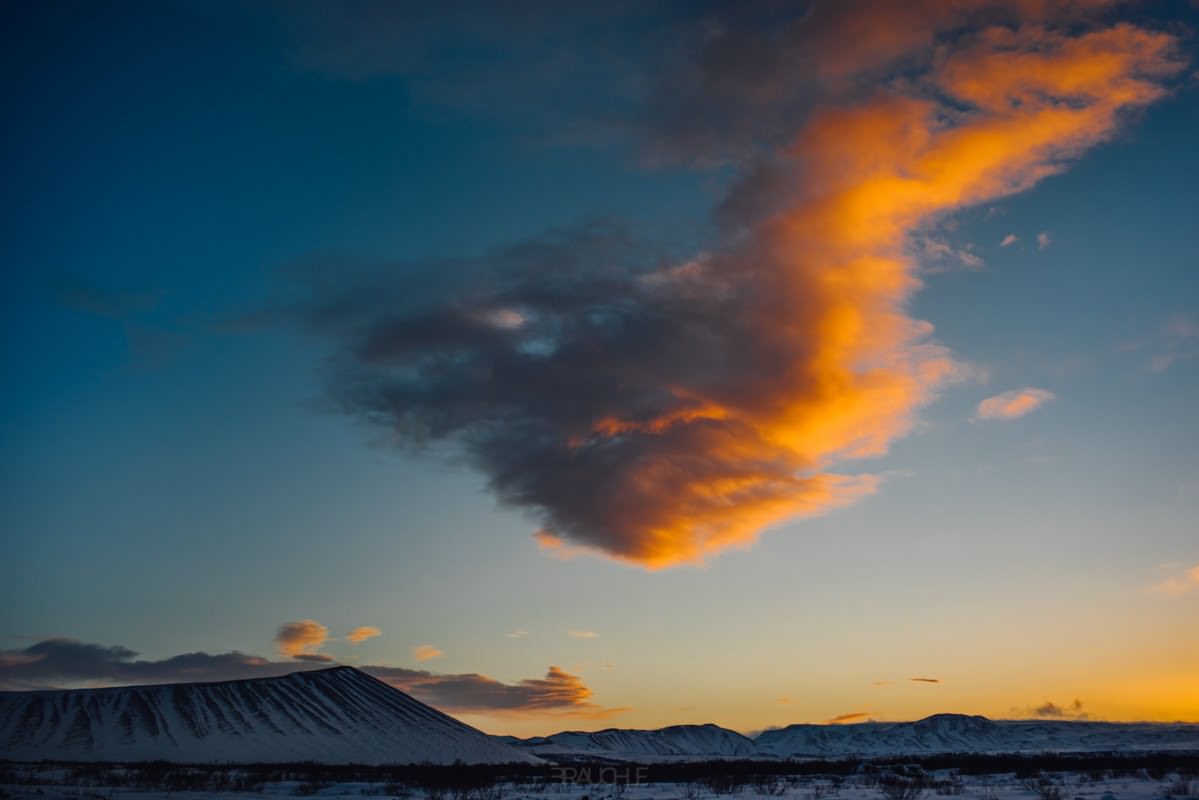
Glowing cloud over the Hverfjall crater at dusk
A glowing cloud above Hverfjall at dusk.
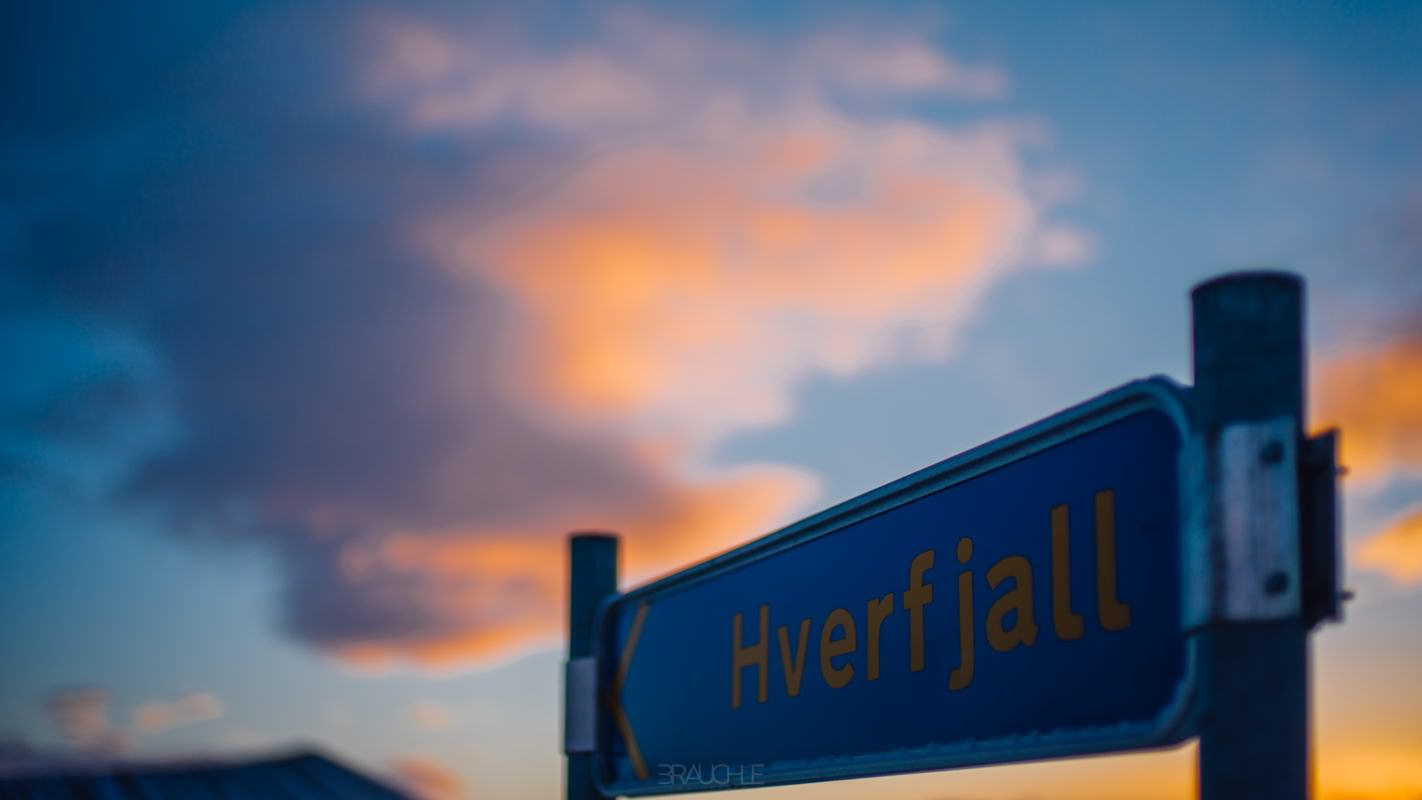
Signpost to the Hverfjall crater against evening clouds
Hverfjall – a signpost against evening clouds.
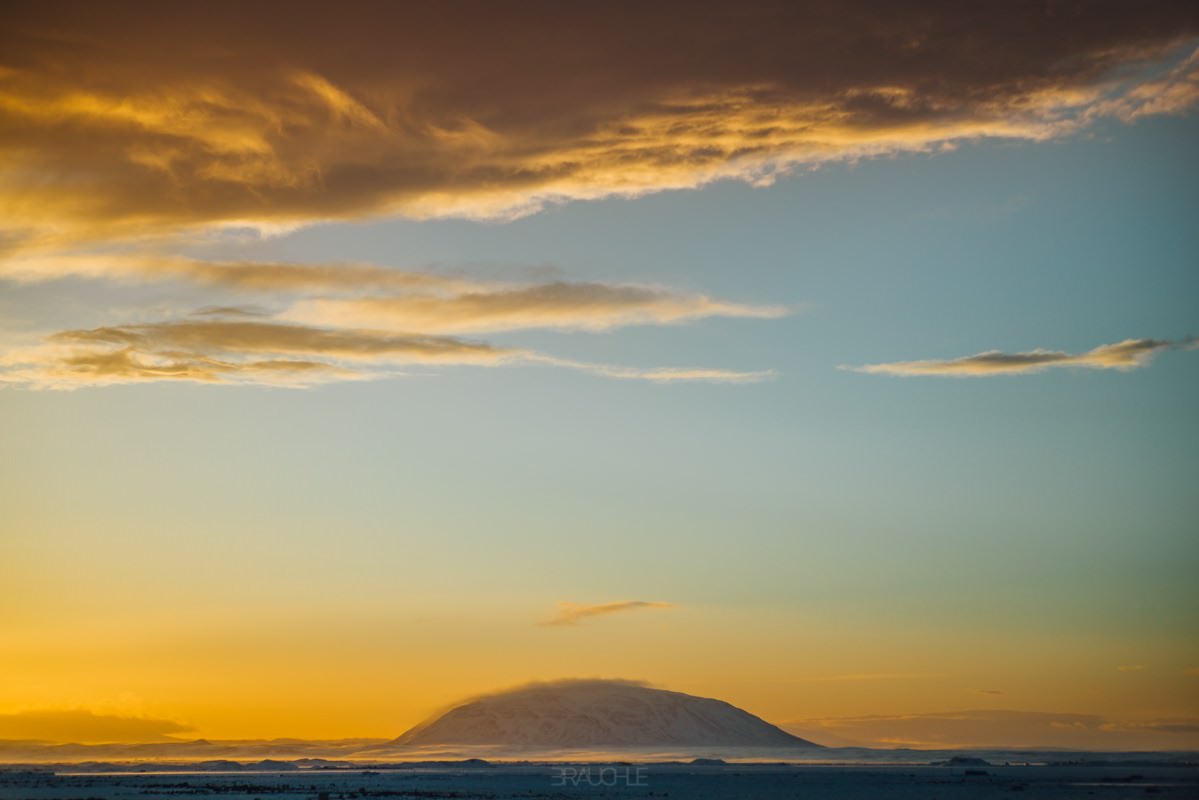
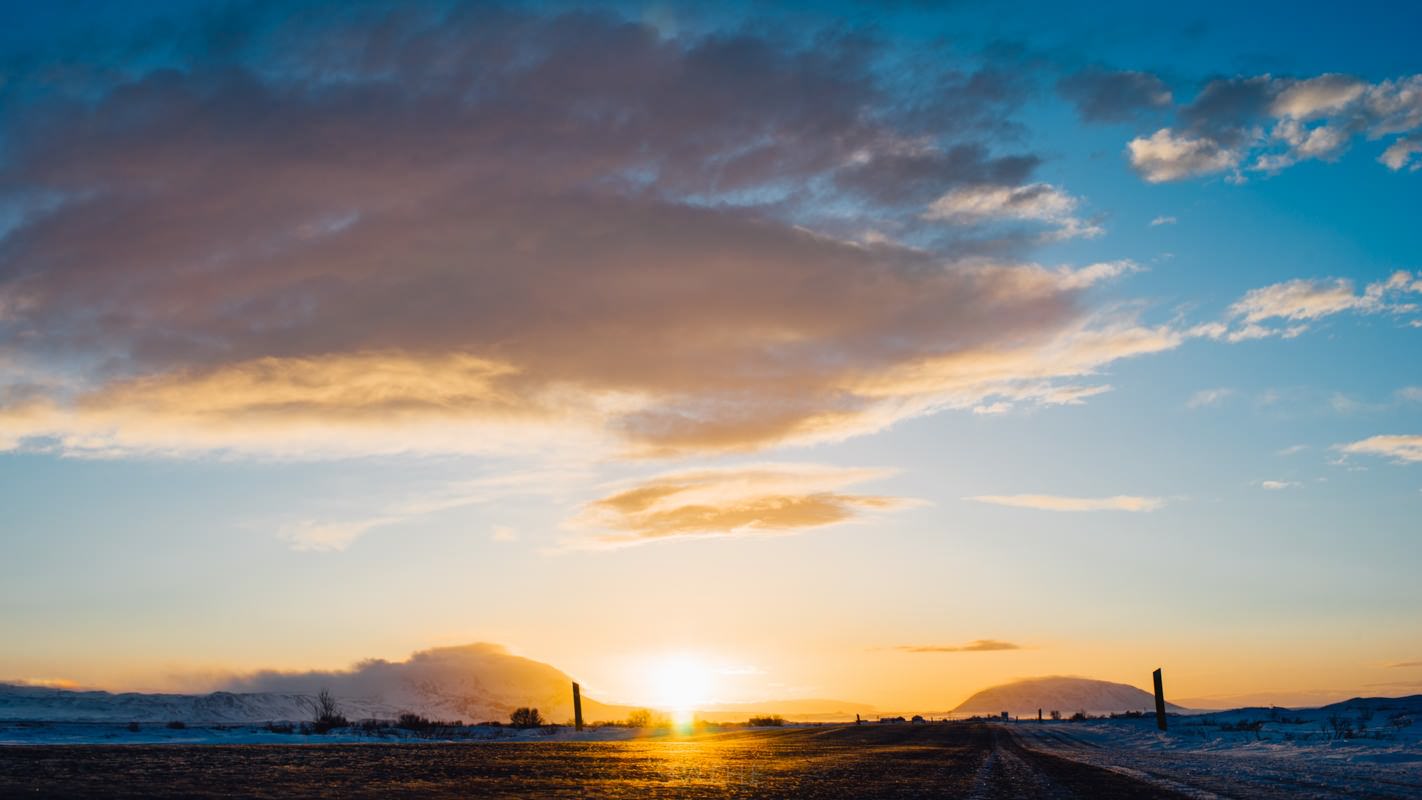
Golden evening sky over a flat mountain near Mývatn
A golden sky above a flat mountain – the low sun bathes everything in light.
Sunset over the snowy plain near Mývatn
Sunset over the snowy plain.
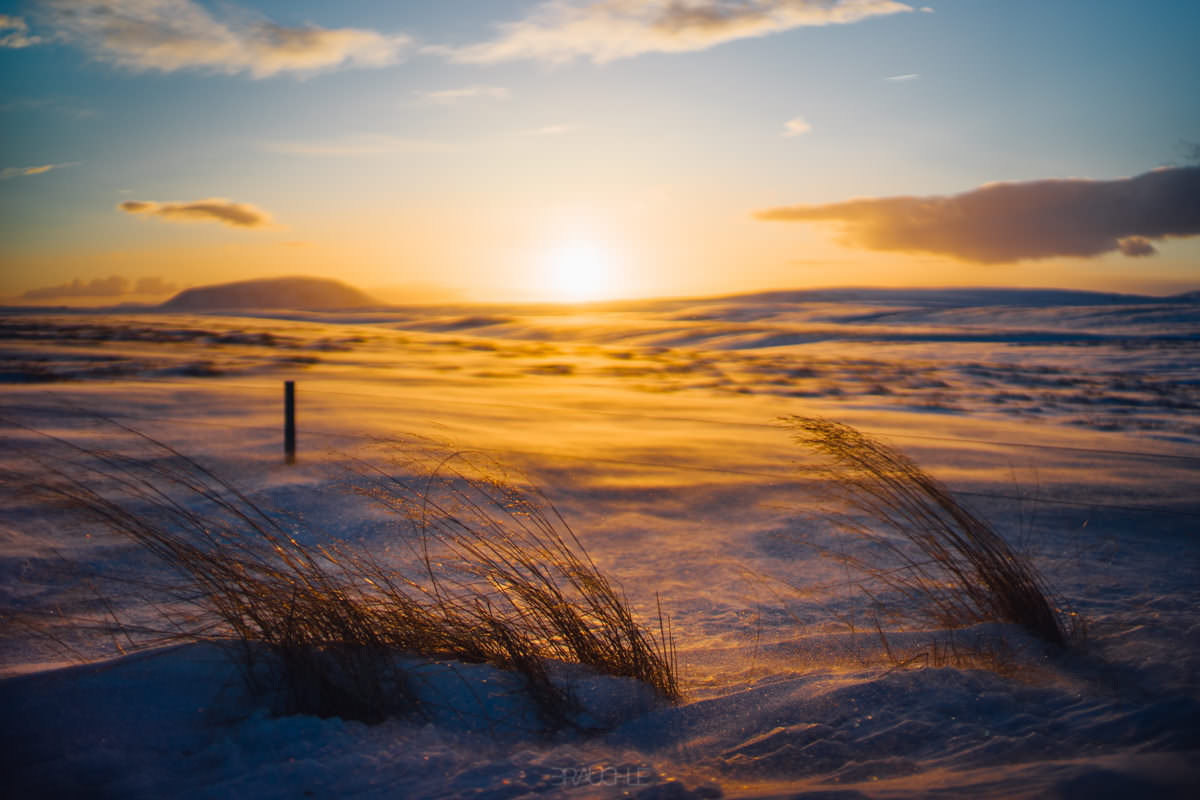
Grass in the wind and a low sun in North Iceland
Grass in the wind and the low sun in the north of Iceland.
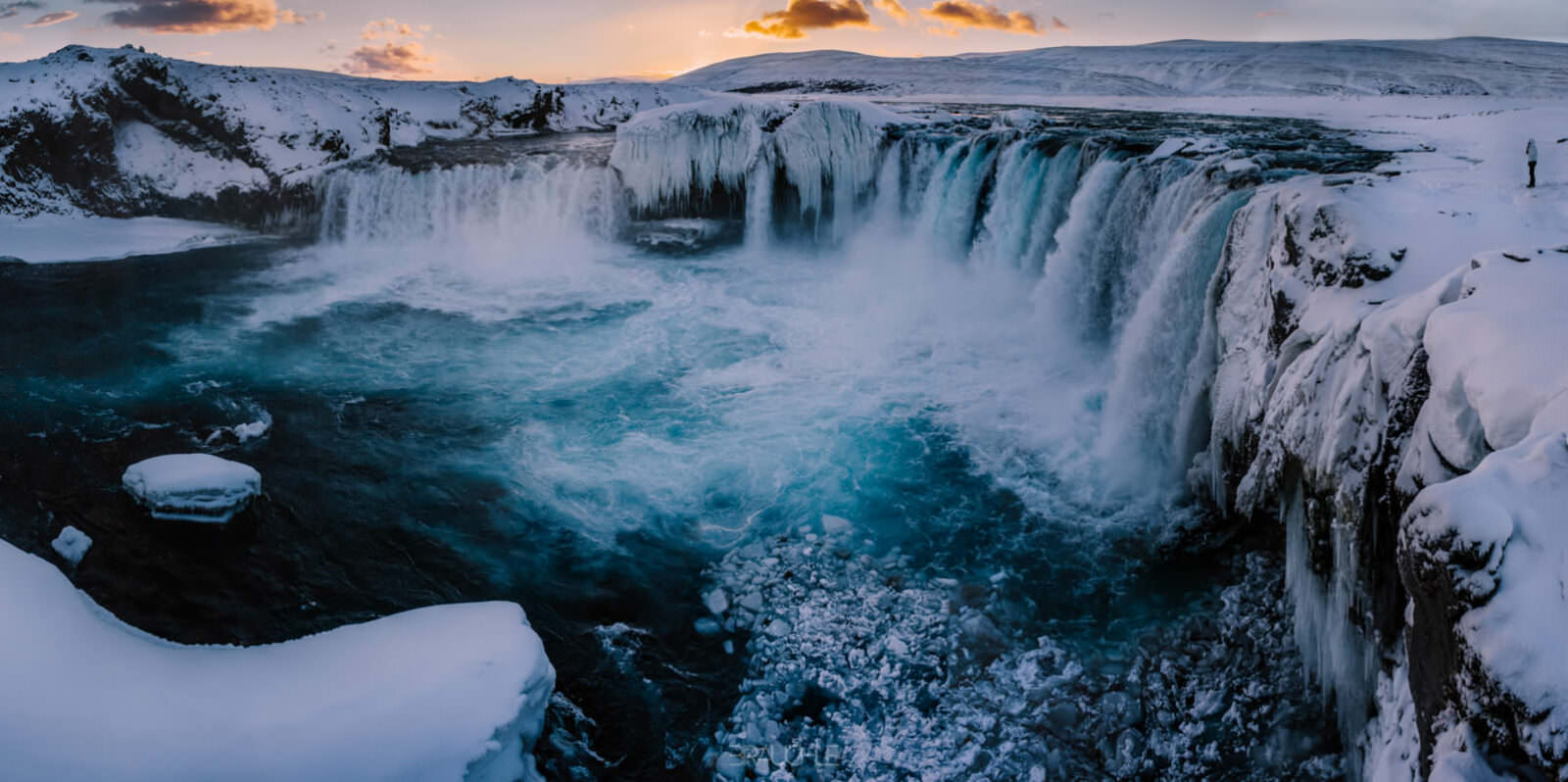
Goðafoss waterfall in winter with snow and ice
Goðafoss in winter – the Skjálfandafljót drops 12 metres over a width of 30 metres.
Goðafoss with icy banks at blue hour
Goðafoss with icy banks in the blue hour.